Category Archives: Racial Justice

Rick Joyner’s Daughter Won’t Have It With Her Father’s Trump Support

rick
Rick Joyner

Rick Joyner is Executive Director of MorningStar Ministries and a prophetic minister who has cooperated with various charismatic churches. He has in a recent Facebook video stated that “serious judgment is coming upon our media”, that “Trump has a divine purpose” and that nobody will be able to put him out of office because of that, and in yet another video claimed that Black Lives Matter is a hate group of the worst order and that the rise of white supremacy in America is Barack Obama’s fault.

These comments led Rick’s daughter, Anna Jane Joyner, to post a Facebook video of her own where she in tears apologized to her African American friends and promised to stand by their side:

19149348_10158809105565282_8322461555252942193_n
Anna Jane Joyner

She says:

[People like my father have] in the last couple of weeks not stood up for what Jesus stood for, and are perpetuating some very dangerous and hurtful narratives and ideas. I wish I could change it. I’m trying my best.

I just want you to know that you aren’t alone, and that I hear you… I’m absolutely standing with you in this very serious sort of battle for the soul of our country.

The video has gone viral, with currently over 70 000 views and almost 1000 shares. In response to this Anna Jane writes: Continue reading Rick Joyner’s Daughter Won’t Have It With Her Father’s Trump Support
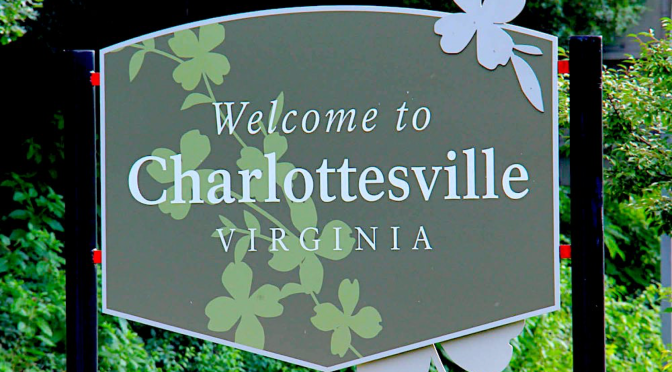
What More Can I Say? On Charlottesville and White Supremacy

by Ebony Adedayo. Originally published on her blog.

After the Charlottesville riot on Saturday, I wrestled with the idea of writing a piece  that would convincingly urge my Christian brothers and sisters to respond. I first contemplated the idea of speaking to the need for the Church to condemn the protest and violence of white nationalism, but it felt somewhat shallow. I then thought about issuing some sort of prophetic thesis, outlining the biblical mandate of justice and love for one’s neighbor. This too felt inadequate. Finally, I concluded that the church in America needed to have a bigger presence in not only speaking out against Charlottesville but all the other displays of white supremacy and nationalism, manifested through police violence, discrimination, lack of affordable housing, poor schools, and the school to prison pipeline. This approach, similar to the other ones, seemed to be gravely missing something.

Scrolling through Facebook, I noticed friends and acquaintances of mine hammering out these same messages. Watching CNN, I saw pundits from both sides of the political aisle putting their own spin on these same perspectives. I suspect that clergy all across America, mounted their pulpits Sunday morning rebuking not only Charlottesville but every vestige of white supremacy in America. And business leaders, if for no other reason but out of concern of their bottom line, have also put in their two cents about these racist events.

And that is when I realized that there is quite literally nothing more than I can say that has not already been said. I couldn’t devise a more clever Facebook post, or a more profound tweet, write a more convincing blog post, or preach a more compelling sermon simply because there has already been an abundance of information communicated through nearly every medium possible. And that is not just in regards to this particular incident. No, whether it was through BlackLivesMatter, the Black Power Movement, the Civil Rights Movement, the Abolitionist Movement, or in response to Charleston, Mass Incarceration, the War on Drugs, Jim Crow, or slavery, people have been speaking. Activists have been fighting, preachers have been raising holy hell, intellectuals critiquing, educators teaching, prophets prophesying, thought leaders proffering new ideas to get not only the church, but America’s people to pay attention to the disease of racism and white supremacy in our nation. Continue reading What More Can I Say? On Charlottesville and White Supremacy

What Kind of Pentecostal Am I?

by Sam Lee.

I have quite an interesting Christian life. Some of my fellow Pentecostals think I am liberal, and they often ask themselves “Is Samuel still a Pentecostal?” Here are my answers to the question they ask:

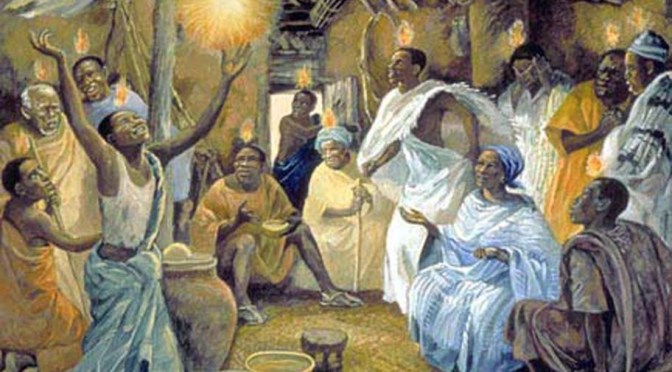
Indeed, I am a Pentecostal, but I wholeheartedly believe that the Pentecostal movement needs serious reform. Just like any other religious movement, it has its own blind spots and makes its own errors, yet, at the same time, it shines in its own beauty. Whenever I say that I am a Pentecostal, I do not mean that I belong to a Pentecostal religious system, organization, or denomination. Instead, I believe in the very essence, the very foundation of our faith as it is based in the Pentecost documented in the Book of Acts. Continue reading What Kind of Pentecostal Am I?

Our Muslim Neighbors

by Rachel Stella. Originally published in Mennonite World Review, republished with permission.

When we talk about living in peace with Muslims, some Christians become uneasy. They reason that because Islam and Christianity have such differences, true peace isn’t possible.

Yet a call to live in peace is not the same as a call to harmonize the two faiths. Indeed, it would be impossible to harmonize them without fundamentally changing one or both. Although they share a few beliefs in common, Islam and Christianity have major theological differences that are irreconcilable.

It is still entirely possible to live well with Muslim neighbors in our communities. Sure, you and your Muslim friend might enjoy a theological debate once in a while. (Depending on one’s personality, such an activity might or might not seem like a good time.) But it doesn’t have to keep us from getting along with each other as neighbors. Continue reading Our Muslim Neighbors

“Make Disciples of All Nations” – and Then the Nations Came to Us!

As Jesus was preparing to leave the earth and ascend to heaven, He gave his disciples a few instructions called the Great Commission. Jesus directed his remaining followers to go and make disciples of all nations, teaching and baptizing them in the way of the Lord. For the last 2000 years or so, that is just what the church has done (albeit imperfectly and not always contextually). Since Pentecost, ministers of the gospel have gone out to other places in the world to preach and teach the Word of God, and have led billions upon billions to faith in Jesus Christ. Amazing, right!

Over the last few hundred years, however, this cross-cultural ministry has primarily been led by American and European missionaries. Out of a desire to win the lost in exotic, third world nations (and sometimes out of a desire to colonize those nations, let’s just be honest) they have crossed land and sea, spending their entire lifetime discipling people in the way of the Lord. Yet, as a result of immigration and other global trends/ situations, something quite fascinating has taken place.

Now people of other nations and ethnicities are coming to America, looking for opportunities to start over, raise their family, receive education or just live to see another day. This has wonderful implications on the gospel and missions efforts, because now the very people that we’ve been trying to reach are our neighbors. But instead of reaching out to them, inviting them into our churches, our homes, our lives, many Christians and churches are pushing them away. Continue reading “Make Disciples of All Nations” – and Then the Nations Came to Us!

The Trouble I’ve Seen: Changing the Way the Church Views Racism

I read and listen to a lot of people who talk about race, racism, and oppression within the church and the academy. Some are academics who I, a seminary-trained theologian-activist struggle to understand. Others are pastors and lay leaders who are excellent storytellers but have less of the critical race theory and historical context to round out their dialog.

Continue reading The Trouble I’ve Seen: Changing the Way the Church Views Racism

Escaping Whiteness: Racing, Raising, and Razing Moses as White


by Paul Alexander

Part 3 of 3

Only one person raced as Egyptian (White) exits Whiteness alive—Moses. Can people raced as White locate themselves in Moses’ narrative and escape? Moses was not raced as ‘White’ from his mother’s womb. He was raced by Whiteness as Other.

Continue reading Escaping Whiteness: Racing, Raising, and Razing Moses as White

Eyes to See: How We View Racism in the Church

An Interview with Dr. Drew G.I. Hart

by Micky ScottBey Jones

Dog-whistle politics. Protest in the streets. Changing religious norms. For many, there is trouble to be seen everywhere we look. In Trouble I’ve Seen: Changing the Way the Church Views Racism, author and theologian Dr. Drew Hart shares the racism he has observed in the American church and in the larger culture.

Continue reading Eyes to See: How We View Racism in the Church

Escaping Whiteness: Egypt as Whiteness

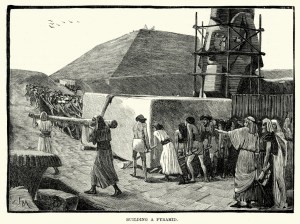
Vintage engraving of Ancient Egyptians building a Pyramid

by Paul Alexander

Part 2 of 8

It is well known that Israel’s exodus from Egypt is a central story for liberation movements, and it could be a way for people who have been raced by Whiteness as White to “inhabit the world beyond the theological problem of whiteness.”[1] I am inspired by African American biblical hermeneutics and the lyrics of slave spirituals that underline the resonances of exodus within enslaved Africans’ hearts and their hermeneutical freedom to identify the Egypt land with the US south.[2]

Continue reading Escaping Whiteness: Egypt as Whiteness