Tag Archives: Activism

Francis, the Pope Who Combined Charismatic Spirituality with Peace and Justice

Pope Francis has departed this earthly life, leaving behind a legacy of uniting signs and wonders with peace and justice! He was both the most charismatic and activist pope the Catholic Church has had in hundreds of years.

In truth, this shouldn’t be an unusual combination – Jesus Himself united pacifism and economic equality with healing the sick and performing miracles. But in our time, there is often a dividing line between Christians passionate about peace and justice and those who emphasize the gifts of the Spirit. For Francis, however, all of this was one and the same.

Few have missed that Francis is a passionate advocate for peace and justice: he has criticized capitalism for neglecting the poor, he lives simply and promotes economic equality, he has prayed for peace in the Middle East both at the Western wall and at the West Bank wall. But what not as many know is that Francis also is a charismatic pope, who believes in Spiritual gifts and who blesses both the Catholic charismatic renewal and Pentecostals.

I have previously written about how Francis stated in an interview that the charismatic movement is necessary for the church. In 2014, pope Francis attended a Catholic charismatic renewal convention in Rome, where he said:

I expect from you that you share with all, in the Church, the grace of Baptism in the Holy Spirit.

I expect from you an evangelization with the Word of God which proclaims that Jesus is alive and loves all men.

I expect that you give witness of spiritual ecumenism with all those brothers and sisters of other Churches and Christian communities who believe in Jesus as Lord and Savior.

[…]

Be close to the poor, the needy, to touch in their flesh the flesh of Jesus. Be close, please!

Later the same year, Francis visited a Pentecostal church, being the first pope ever to do that. He asked for forgiveness for the hostility that some Catholics has shown to Pentecostals:

“Among those who persecuted and denounced Pentecostals, almost as if they were crazy people trying to ruin the race, there were also Catholics. I am the pastor of Catholics, and I ask your forgiveness for those Catholic brothers and sisters who didn’t know and were tempted by the devil.”

 “Someone will be surprised: ‘The pope went to visit the evangelicals?’ But he went to see his brothers.”

Similarly to the saint from which he took his name, Francis of Assisi, pope Francis loved the poor and experienced amazing miracles. Even if there are many things I don’t agree with when it comes to Catholic theology, I truly rejoice when I see how pope Francis walks in the same tradition, following Jesus both when it comes to Spiritual baptism and social justice.

Micael Grenholm is a Swedish church historian, author and an editor for PCPJ.

ska%cc%88rmavbild-2017-01-06-kl-21-17-02

Pentecostals & Charismatics for Peace & Justice is a multicultural, gender inclusive, and ecumenical organization that promotes peace, justice, and reconciliation work among Pentecostal and Charismatic Christians around the world. If you like what we do, please become a member!

In Loving Memory of Tony Campolo (1935-2024)

The evangelist Tony Campolo has left this earthly life at the age of 89 and gone home to his beloved Jesus after preaching in tens of thousands of places across the U.S. and the world, leading many to the Christian faith. 

Tony particularly resonated with young people through his humor and radicalism, combining the proclamation of the Gospel with a message that following Jesus involves engaging with the poor, the environment, and economic justice.

On one occasion while preaching, he said:

“Yesterday, ten thousand children died of hunger. Most of you don’t give a shit. What’s worse: many of you are more upset that I said ‘shit’ than that ten thousand children died!”

He called himself a “Red Letter Christian,” a reference to the way Jesus’ words are often highlighted in red in English Bibles, emphasizing that Jesus’ teachings should define every Christian’s life. Loving enemies, giving to the poor, and healing the sick aren’t optional extras for a select few—they are every Christian’s mission and privilege.

This conviction made Tony Campolo a strong critic of the Christian right in the U.S. In 2006, he told talk show host Stephen Colbert:

“Mixing religion and politics is like mixing ice cream and horse manure. It doesn’t hurt the manure, but it ruins the ice cream. I think this blending of church and state has done great harm to religion, and I think we’re going to regret it.”

(“I think Ben and Jerry’s are working on that flavor,” Colbert quipped in response.)

My favorite story about Tony Campolo is the following:

Tony was in Hawaii for a conference and couldn’t sleep, so he went to a small diner at 3 a.m. While sitting there, a group of prostitutes came in, and one of them, Agnes, mentioned that it was her birthday the next day. When her friend joked that they should throw her a party, Agnes replied despondently:

“I’ve never had a birthday party in my entire life. Why would I have one now?”

Tony decided to throw her a party. He worked with the diner’s owner, Harry, to decorate the place. When Agnes arrived at 3:30 a.m. the next day, she was greeted with balloons, cake, and a crowd shouting, “Happy birthday, Agnes!”

She was deeply moved. When she received the cake, she asked if she could take it home instead of cutting it. She carried it like a sacred treasure.

After Agnes left, Tony prayed with those present, which included several prostitutes. Harry then asked Tony what kind of church he belonged to. Tony replied:

“I belong to a church that throws birthday parties for prostitutes at 3:30 in the morning.”

Harry responded: “That’s the kind of church I want to join.”

Thank you, God, for Tony Campolo and all he has meant to so many people! May he enjoy the heavenly celebration awaiting him!

Humanity’s Sin Against the Animals

By Greg Boyd, originally published on his blog ReKnew.

While the mustard seed of the Kingdom has been planted, it obviously hasn’t yet taken over the entire garden (Matt 13:31-42). We continue to live in an oppressed, corrupted world. We live in the tension between the “already” and the “not yet.”

Not only this, but we who are the appointed landlords of God’s earth continue to live in rebellion against God and abuse our God-given authority over the earth. Our first mandate included taking care of the earth and animals, and I’m convinced this continues to be a foundational benchmark for how we’re doing as a human race. Unfortunately, this benchmark suggests we aren’t doing well at all.

For example, it’s well known that the welfare of the earth’s ecosystem significantly depends on tropical rain forests. Yet we are currently cutting down an area of tropical forest the size of Greece each year. Some estimate that up to 80% of the earth’s rain forests have already been lost, the majority in the last 100 years.

So too our apathy toward the environment as well as toward the suffering of the poor is largely to blame for the current clean-water crisis humanity faces. All told, approximately 10 million people die each year because their water is unclean.

Our care for animals is even more dismal than our care for the land, in my estimation. Largely due to our poor stewardship, thousands of species of animals have already become extinct or are being pushed to the brink of extinction. According to most experts, the population of over half of all animal species are in decline. Some estimate that in the next 30 years as many as one-fifth of all species living today will become extinct.

But in my opinion, the single most telling piece of evidence that shows how poorly we’re manifesting our call to care for animals is the creation of factory farms. More than 26 billion animals each year are forced to live in miserable, over-crowded warehouses, where there is absolutely nothing natural about their existence and where they are subjected to barbaric, painful, industrial procedures.

We are falling far short of the benchmark, and we, the earth, and animals are suffering as a result.

Being a follower of Jesus gives us no special wisdom to resolve the complex issues that we face regarding how we care for the earth and animals. The answers of the Kingdom are not found in voting one way or another, in boycotting certain industries, or various other activist approaches.

While I’m not opposed to these activities, followers of Jesus are called to live in a way that reflects God’s original design for human dominion while revolting against everything that is incongruous with this design. Regardless of what scientific or political opinions may be in vogue, our call remains the same. We’re to manifest God’s care for the earth and demonstrate God’s merciful love toward animals.

This means that we must think critically about things like the energy we consume, the water we use and the waste we throw away. It means we must be informed about the effects our lifestyle choices—and eating choices—have on the earth and on animals.

Insofar as it is possible, we’re to manifest—in the present—the harmonious relation between God, humans, animals, and the earth that will characterize the cosmos when the Kingdom is fully come. This is a fundamental aspect of what it means to be part of a Kingdom that manifests the beauty of God’s original design for creation while revolting against everything that corrupts it.

—Adapted from The Myth of a Christian Religion, pages 148-151.

Greg Boyd is an internationally recognized theologian, preacher, teacher, apologist, and author. He has been featured in the New York Times, The Charlie Rose Show, CNN, National Public Radio, the BBC, and numerous other television and radio venues.

ska%cc%88rmavbild-2017-01-06-kl-21-17-02

Pentecostals & Charismatics for Peace & Justice is a multicultural, gender inclusive, and ecumenical organization that promotes peace, justice, and reconciliation work among Pentecostal and Charismatic Christians around the world. If you like what we do, please become a member!

Why Justice activists need spiritual healing

(This article also appears at Just Theology.)

Christians who take Jesus’ parable of the sheep and the goats seriously understand that we are called to serve “the least of these” in love. In addition to individual acts of mercy, many have come to understand that providing aid to “the least” means addressing the systems of inequality that skew our collective resources toward “the most” instead. This leads to various expressions of justice activism.

I am by no means a fervent activist. While I have attended some protests, I am more likely to express my convictions through letter writing, phone calls, donations, conversations, prayer, and service. Yet I know members of my seminary, friends, and those in local activist communities give more of themselves and take much greater risks. And I know activist efforts take a toll. My friends have suffered compassion fatigue, burnout, and shame and guilt at not being able to offer more when community demands are pressing. Working for justice takes a physical and emotional toll. It takes a spiritual toll as well.

Continue reading Why Justice activists need spiritual healing

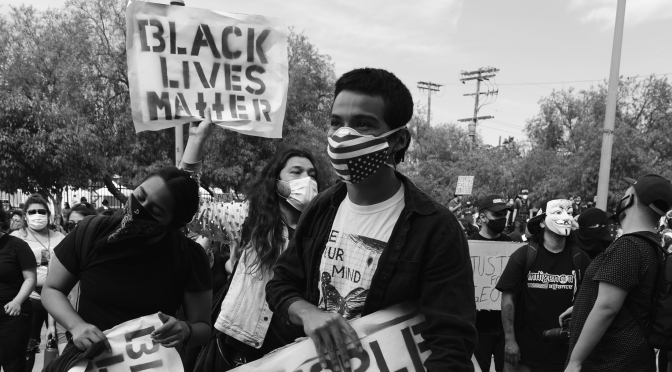
Six Ways Christians Should Respond to the #BlackLivesMatter Protests

Agu Irukwu, senior pastor of the Jesus House and the Pentecostal President of Churches Together in England, recently shared on Premier Christianity the six kinds of responses he would like to see from Christians in the aftermath of George Floyd’s death and the protests that are going on:

1. Empathize

“I understand how frustrations can boil over as a result of an incident like this.”

2. Pray

“As a Christian, it is one of the most effective things I can do.”

3. Share a message of love and forgiveness

“This does not in any way trivialise the very real pain, hurt and frustrations that are being experienced by many African Americans who suffer the impact of an ingrained racial bias in the system.”

4. Speak out

“Evil and injustice thrives when good people do not speak out.”

5. Name and address institutional racism in your country

“We have inherent inequalities in our own systems. The institutional racism that exists must be named and addressed.”

6. Build on the work already being done

“I am resolved that I will do all that I can in my various capacities to encourage more representation of black and ethnic minorities in our institutions.”

Read more at the website of Premier Christianity.

ska%cc%88rmavbild-2017-01-06-kl-21-17-02Pentecostals & Charismatics for Peace & Justice is a multicultural, gender inclusive, and ecumenical organization that promotes peace, justice, and reconciliation work among Pentecostal and Charismatic Christians around the world. If you like what we do, please become a member!

Pentecostal Spirituality: The Power to Practice (Not Just Believe)

By Elizabeth D. Rios, EdD, DMin (ABD)

I started this article a week ago, but felt something was missing. Today, I found it. I think it was holy indignation!

What sparked this holy anger?

Hearing a well-known, popular, nationally recognized Pentecostal preacher share (on an Instagram clip) on his pulpit that he hates politics. How he doesn’t give a rip about it. How he doesn’t care who is in charge.

He then goes on to say, “You know how we find our help, through Jesus Christ, the savior of the world, the power of the holy ghost. You get involved in that mess, you get involved in offenses. ‘That offends me, well I can’t believe…’ Who gives a rip what they say? I want to know what God says. I’ve lived long enough to be in a place where I am asking the question, is it going to be politics or Pentecost?”

To which you hear the congregation break out into applause. Although it wasn’t overwhelming applause there were still people who actually thought this was responsible preaching. Albeit, he’s been a pastor for decades (and I actually like and know him) but I had to hear it over a few times because I was sad and yes, mad over it. Continue reading Pentecostal Spirituality: The Power to Practice (Not Just Believe)

The Challenge of Followership

Leadership! It’s a fraught word, describing an even more fraught set of ideals. Leadership, in the final analysis, is neither good or bad. It is amoral. Like the notes on the musical scale and the letters of the alphabet, the essence of leadership, according to John Maxwell, is influence. When people are gifted as leaders, or in some way attain a leadership title, they walk in positions of influence. 

And therein lies the rub, because a culture is set according to the heart of the leader and those they surround themselves with, for good or evil, for strength or weakness. Someone whose influence leads people where they otherwise may not have gone, be it morally just or morally reprehensible, is setting or changing a culture for the duration of their leadership and beyond. That is, technically, good leadership, be it ever so terrible in its outcome. Nations, churches, organisations rise and fall on the way in which they’ve been led.  In 2019 the various modes of leadership across the planet denote that we, as citizens of the world, are in serious trouble.

In the face of drastic climate change in which the earth is vomiting the symptoms of its travail in torrents of floods, droughts, bushfires, cyclones, hurricanes, earthquakes, tsunamis, famines, mud slides, volcanic eruptions and other ‘un’natural catastrophes across the planet, one group stands as the voice of reason, crying out for the influencers of the world to pay attention and change course before it’s too late. The other group, like the people in Noah’s day, keep working, consuming, using, spending and playing as though there’s no tomorrow – which one day may be true. Continue reading The Challenge of Followership

Pentecostals, the Church and Justice

by Elizabeth D. Rios, Ed.D. D.Min (ABD).

Pentecostalism has often been accused of being withdrawn from social and political concerns due to an either/or mentality that erroneously makes people feel like they have to choose between evangelism, personal salvation and political engagement.  When we look at the Pentecostal movement in its early days we see that there not be such an ultimatum to choose. It is not either/or but both/and.

In my research, I found that in addition to this mindset, lack of knowledge by those in positions of power in the church on things such as how justice is biblical, how civic advocacy is not the same as political campaigning and even their own Pentecostal history has contributed to the passivity of Pentecostals to take a step toward advocating for justice. Interestingly enough, the Pentecostal movement has always thrived among the underprivileged and its success was in how they made leaders out of the very people overlooked and undervalued in society.

Dr. Raymond Rivera would often quip in his office at the Latino Pastoral Action Center in NYC, Pentecostal churches turned the janitor into the Pastor and the housekeeper into the Deacon. This in itself was a prophetic and political activity which challenged power structures and hierarchies, as they elevated the lowly and raised up the oppressed. The Pentecostal church in and of itself stood as not only a beacon of hope but a political declaration to surrounding culture that through the power of the Holy Spirit, they made treasure out of what society deemed as trash.

Some churches are known for having produced leaders that went on to make significant contributions to the movement and in their communities, other churches were known to produce leaders that shook the very foundations of their cities by involving themselves in movements of peace and justice, and still others were so passive the community did not even know they existed.  What I’ve found to be true is that this happens because some pastors used their pulpit and classrooms for discipleship that focused not only on who they were being made into as new creations but how they were expected to live out Christ-center practices as citizens. Thus the church in the life of a believer is crucial for their formation not just spiritually but civically. Essentially, where you go to church matters.

Researchers Nathan Todd and Anne Rufa stated, “Understandings of social justice do not develop in a vacuum, and many social settings such as families, schools, and religious congregations provide a rich context for social justice development.”* Therefore, I argue that the church is pivotal to the making of justice crusaders.

However, a pastor, planter, leader does not know what they do not know. Unless exposed to Pentecostal history that discusses the origins of Pentecostalism as a movement of the marginalized in a variety of contexts, they will buy into the nationalistic ideology that has pervaded our westernized view of evangelicalism. If not taught about how in the early 1900s the move of the Spirit was very much political in nature by empowering disciples to stand against inequality while being victimized themselves, they will believe the narrative always taught, evangelism is the only purpose of the church.

Dario Lopez Rodriguez states,

“The God of life is the God who loves and defends life, and liberates human beings from all oppression. In this sense, for Pentecostals who have been liberated by God from the chains of oppression, it should not be strange that they be involved in the defense of the dignity of all human beings as God’s creations. This is a concrete form of living in the Spirit, and for this reason, they must denounce all forms of personal, social and structural sin.”**

Hence, Pentecostal pastors and leaders, use your worship services, your education rooms, your table fellowship as labs not only to hear about how God is working in the lives of your people but to pastor and teach them how to think and act in today’s world from a Jesus centered, practice-based perspective. In this way, discipleship becomes a means of political engagement and people energized by the Spirit are formed into defenders of human dignity committed to both spiritual and social transformation. The rise of the both/and movement has begun.

Rev. Dr. Elizabeth Rios is the Founder of the Passion Center, a justice-oriented faith-based community helping people stand up and live out the gospel mandate of loving God, loving themselves and loving their neighbor in Miramar, FL. Find out more at www.ThePassionCenter.org and www.ElizabethRios.com

Enter your email address to subscribe to this blog and receive notifications of new posts by email.

ska%cc%88rmavbild-2017-01-06-kl-21-17-02Pentecostals & Charismatics for Peace & Justice is a multicultural, gender inclusive, and ecumenical organization that promotes peace, justice, and reconciliation work among Pentecostal and Charismatic Christians around the world. If you like what we do, please become a member!

References


*N.R. Todd and A.K. Rufa, 2013. “Social Justice and Religious Participation: A Qualitative Investigation of Christian Perspectives.” American Journal of Community Psychology 51 (3/4): 315-31, accessed November 12, 2018 doi: 10.1007/s10464-012-9552-4.

**Dario Lopez Rodriguez, 2011. “The God of Life and the Spirit of Life: The Social and Political Dimension of Life in the Spirit.” Studies in World Christianity, (17.1) 1-11, accessed September 4, 2018, doi:10.3366/swc.2011.0002.


Cover photo: Rural church in South Africa, by Micael Grenholm

Four Out of Five Christians Take Action on Poverty

by Ruth Valerio, originally published on her blog.

It’s a pretty scary thing asking an external body to do some research for you and having absolutely no control over the findings. What if you don’t like what they come back with?!

So it was with some nervousness that we decided at Tearfund to team up with the research firm Barna Group to look into connections between caring for people in poverty and spiritual growth.

In particular, we wanted to look at what we call a ‘whole life response’ to poverty. Tearfund is absolutely committed to helping Christians, in the UK and around the world, respond to poverty in a ‘whole life’ way: through prayer, giving, advocacy, lifestyle, and other actions such as volunteering. We summarise that as Pray, Act, Give.

In the research we wanted to explore this whole-life response and see how that features for Christians in the UK (and in the US too – a US version is soon to be released). The research came back with a huge amount of fascinating findings – too many to go into in detail here! But three things in particular stood out for me: Continue reading Four Out of Five Christians Take Action on Poverty

Black Lives Don’t Matter As Much As the National Anthem

by Ramone Romero.

It seems sometimes that in the national debate about #TakeAKnee the focus has become about “the flag” and “the anthem”, and it is often being forgotten that #TakeAKnee is a protest about the systemic injustices of law enforcement against people of color.

Yet even if that is forgotten in the news and chatter, this is still intensely about race.

The #TakeAKnee protests in the NFL (and spreading across the sports world) are offensive precisely because they began with black athletes.

The offense people are taking as disrespect to the flag, the anthem and to “America” itself comes because these are black athletes protesting.

How dare they interrupt the anthem?
How dare they not salute the flag in the way we want?
How dare they draw any amount of attention to themselves?
How dare they interrupt our holy moment of nationalistic worship?

Continue reading Black Lives Don’t Matter As Much As the National Anthem