The Key to Awakening

by Andrew Meakin.

Frank Bartleman was a discontented church-hopper, seemingly looking in vain for a perfect church. He ended up at the Azusa Street revival.

William J Seymour was broke and homeless, dependant on the hospitality and support of others when God used him to initiate the Azusa Street revival.

Evan Roberts was a Bible School dropout, diagnosed by a psychologist as having ‘religious mania’. He went on to be the primary leader in the Welsh Revival of 1905.

Seek God with your whole heart and let history be your judge.

It takes discernment to tell a visionary from a delusional.

I felt God challenge me. If I’d actually met intercessory-prayer firebrands like Leonard Ravenhill or Frank Bartleman before they were well-known would I have wanted to be their friend or would I have dismissed them as legalistic and critical?

Pastors, I believe this is a word for this hour. Many of you have people in your church who are like uranium rocks. Knowing they could blow up the church if ever used, you see the risk as too great so you simply leave them in the ground. But nuclear energy can also be used to power a city if properly utilised! Continue reading The Key to Awakening

Challenging Prosperity Theology and Legalism in Africa

by Bob Ekblad, originally published on his blog.

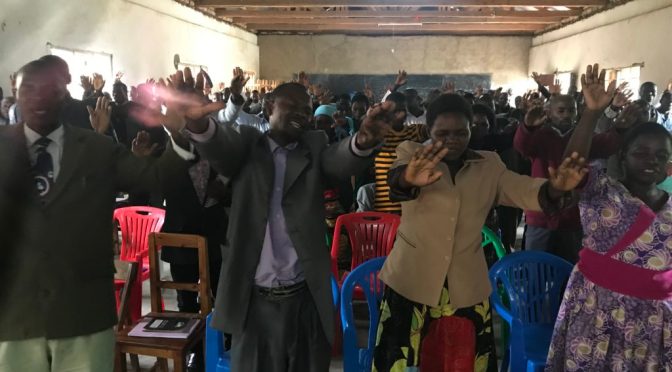
For the past two weeks Gracie and I have ministered alongside our African partners to run four-day trainings for pastors and leaders in Kenya, Tanzania and Zimbabwe. We have been delighted to see widespread negative images of God dramatically give way to our teachings and group Bible studies on God’s love and grace, exciting us to further equip people to proclaim good news.

Negative images of God are common in places of poverty and hardship. Christians, Muslims and adherents of traditional African religions are all inclined towards legalism and performance. Known “sinners” usually do not feel welcomed in church services, until they first make required changes. Once inside the church they will often hear messages of condemnation, and promises that a life of purity and sacrifice will lead to financial and personal success. Continue reading Challenging Prosperity Theology and Legalism in Africa

Article in Washington Post on Pentecostal-Charismatic Trump Support

Yesterday, PCPJ’s director Erica Ramirez and professor Leah Payne were published in the Washington Post as they explained the Pentecostal-charismatic support for Donald Trump.

They note that while several evangelical Trump supporters were initially skeptical to the candidate, Pentecostals and charismatics who support him did so early on. They identify five reasons why American P&Cs might have had an easier time accepting Trump as a great president compared to other Christians:

  1. Pentecostal-Charismatic celebrity culture
  2. Prosperity teaching
  3. Lowbrow know-how (anti-institutionalism)
  4. Zionism
  5. Monarchy Theology

We really recommend you to read the article in its entirety at Washington Post. Below is an excerpt from the last point, on how Trump is viewed as a divinely appointed monarch:

When Pentecostal-Charismatic advisers to Trump talk about their role in this divine drama, it is as godly intercessors on the president’s behalf.

From this vantage point, it hardly matters whether Trump behaves morally, won the popular vote or even colluded with Russia. Trump is not just a leader selected by the people: he is an intervention — God’s anointed, divinely elevated ruler. Actually, the sheer unlikeliness of Trump’s win fits the Pentecostal-Charismatic imagination for miraculous intervention, and moves Trump far above the reach of critique.

When viewed through the prism of Pentecostal-Charismatic tastes and theologies, the enthusiastic support among the faithful for Donald Trump becomes clear — to them, he’s God’s anointed king.

ska%cc%88rmavbild-2017-01-06-kl-21-17-02Pentecostals & Charismatics for Peace & Justice is a multicultural, gender inclusive, and ecumenical organization that promotes peace, justice, and reconciliation work among Pentecostal and Charismatic Christians around the world. If you like what we do, please become a member!

Reinventing Pentecostal Prophetic Ministry in the Philippines

by Hadje C. Sadje.

“Sociologically, (Pentecostalism) it was a religion of the poor, marginalized, and dispossessed, who had little interest in matters of theology or church politics.” – Alister McGrath, Christianity’s Dangerous Idea (2007): 436-437.

Introduction

Notably without a question mark, the quotation above expresses the truth about Filipino Pentecostal/Charismatic movements are more attractive to poor and marginalized. According to Julie C. Ma and Wonsuk Ma (2010), a Korean couple who spent the 13 years working as missionaries in the Philippines, argue that such daily struggle has made Filipino people turn to religions which promise divine answers, and Pentecostal-Charismatic Christianity has presented the most attractive message. For instance, they both describe that the nine-million strong El Shaddai Catholic Charismatic group in the Philippines exemplifies the flight of poverty-stricken masses to the miracle-performing God (p. 239). Continue reading Reinventing Pentecostal Prophetic Ministry in the Philippines

Re-thinking Romans 13

Romans 13:1-8 is a passage that has been used in ways that are unjust.  It has been used to justify the divine right of kings, to justify slavery, to justify apartheid and segregation.  This text has been used in support of the Just War Theory.  It’s still used in the church to justify oppressive policing and discounting of immigrant’s basic human rights.  If people would just obey the law, the logic goes, then they will be left alone.  But is that what this passage means?  Is Paul saying that that all laws are good? Is he saying that all people are treated equally under the law? Is he saying that laws should be obeyed without question?  These things are often read into the passage making these verses something like a sword to keep oppressed people in their place.  I don’t believe that was Paul’s intent.

Just because a particular action is legal does not mean it is just.  As God’s people it’s imperative that we carefully discern and think through texts like these so that we might walk well in the way of Jesus.  How shall we view this set of scriptures? Continue reading Re-thinking Romans 13

Heidi Baker on Gender Equality in the Church

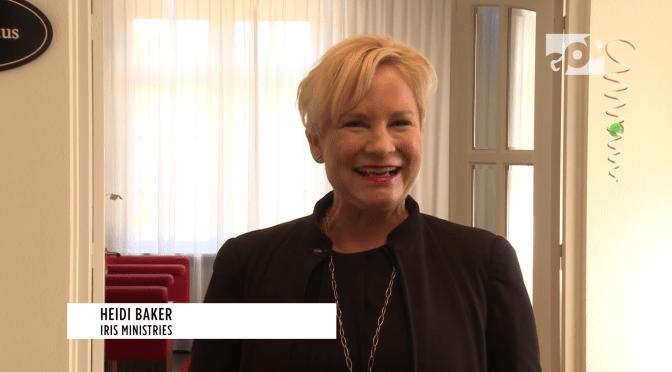
Heidi Baker, founder and CEO of Iris Global – a missionary organization based in Mozambique – has inspired thousands of Christian women to aspire for leadership positions and reach their full potential. In this video from God TV, she explains some of the reasons we should embrace gender equality in the church. Who honestly thinks their daughter cannot change the world, or that a donkey would be more worthy of sharing God’s word than a woman?

What is the best argument for gender equality according to you?

It’s Impossible to Both Love and Kill Our Enemies

Jesus told us to love our enemies (Mt 5:44). This has been the cornerstone of Christian pacifist theology; whether you look at the early church, or the Anabaptists or the early Pentecostals, they all agreed on that loving enemies is incompatible with killing them, and hence they refused to wage wars or use violence against other human beings.

For this reason, the Christian non-pacifist has to argue for one of the following positions:

  1. Killing is an act of love towards the one you kill.
  2. We should not follow Jesus’ command to love enemies when we decide to kill people.

There are serious problems with both of these ideas. Let’s start with the first one. Continue reading It’s Impossible to Both Love and Kill Our Enemies

The Difference Between Pentecostalism and Christian Pentecostals

As reflective Pentecostals, we have many concerns about the progress of the movement. We know how much it is growing in the world. We know how many marvelous stories and testimonies we can find in our churches, but also we know about the abuse of power. We know about the general rejection of theology; we know about the unconscious politicization. So when we put all that stuff in balance, we have two options: leave or remain. I have to be honest. I left, a few years ago. Disappointed. Sad.

I couldn’t understand how God was working among people who despise to know him. It took me some years to understand that God works wherever he wants. And also, that the rejection of an intellectual knowledge doesn’t mean rejection of other kinds of knowledge. Then I realized how lost I was. I tried — wrongly — to use all the tools I acquired studying, but I forgot that theology is not merely an intellectual discipline, but a way of life. That is the meaning it had for the first Christians. In other words, I discovered that not only my brothers were unconscious about themselves — so was I. Because I hadn’t understand the core of Pentecostalism. Continue reading The Difference Between Pentecostalism and Christian Pentecostals

Charismatics Have A Hope the World Doesn’t Have

lucy peppiattLucy Peppiatt, principal at Westminster Theological Centrehas written an excellent piece on why all Christians should be charismatic and why the risk of “charismania” shouldn’t put us off from seeking the gifts of the Spirit. One of the reasons she gives relates strongly to what I call charismactivism, the fact that Spiritual gifts ought to promote peace, justice and a better world:

I think that most of us feel overwhelmed by the world’s problems. It’s enough to deal with our own and our family’s problems let alone terrorism, unemployment, war, addiction, crime, disease, homelessness, abuse, etc. etc. I’m always astonished and deeply moved by how resilient human beings are in the face of horror, and this seems regardless of whether they have a faith or not. Sometimes humans are just extraordinarily strong. All Christians should carry a hope that good will triumph over evil in the end, because that is the promise of Jesus’s life, death, and resurrection.

Continue reading Charismatics Have A Hope the World Doesn’t Have

Hijacked Pentecostalism

by Sam Lee. Originally published at his blog.

Pentecostalism is one of the fastest growing Christian movements in our world today, especially in the global South. Some Christians in the West admire this growth.  Most of them witness the decline of the organized Christianity in their own countries, while Pentecostalism attracts millions of people in the global South.  As I have been observing, the Western Christians often romanticize the growing Pentecostalism in the South!

As a full time Pentecostal (Non-Western) pastor and a sociologist I have several reasons to be concerned about the current condition of Pentecostalism in the South:

There is an emerging radicalism among the Pentecostals in the South. This radicalism does more harm than good, especially in the Non-Western world. Radicalism that is proclaimed from the pulpits of the fundamentalist Pentecostals offers no room for dialogue, and communication with those who are different. Such Pentecostals do not easily accept peoples from other Christian denominations, let alone those from other faiths.

Continue reading Hijacked Pentecostalism

Pentecostals & Charismatics for Peace & Justice