Tag Archives: Global Pentecostalism

Few but Pentecostals Realized that World War One was Pointless

This year marks the 100th anniversary of the end of the ”War to End All Wars”: World War One. It directly killed nine million combatants and seven million civilians. Furthermore, it contributed to the spread and severity of epidemics that killed an additional 100 million people.

And here’s the really embarrassing part: with few exceptions, WW1 was a war in which Christians killed other Christians. Catholics fought other Catholics; Protestants fought other Protestants. People who claimed to follow Jesus slaughtered their supposed brothers in the trenches because their leaders – many of which claimed to have been appointed by God – ordered them to.

Madness. Utter, disgraceful madness.

As time went on and more people died without breaking the stalemate of the conflict, many started to protest. In fact, one of the reasons the war ended in 1918 was that soldiers and civilians alike criticized their own governments for continuing the pointless fighting. But many were late in the game. Christian pacifists criticized WW1 long before it was cool: and many of them were Pentecostals.

Skärmavbild 2018-11-19 kl. 14.58.42

The Weekly Evangel, the official evangelistic magazine of the Assemblies of God, stated in 1917:

From the very beginning, the movement has been characterized by Quaker principles. The laws of the Kingdom, laid down by our elder brother, Jesus Christ, in His Sermon on the Mount, have been unqualifiedly adopted, consequently the movement has found itself opposed to the spilling of the blood of any man, or of offering resistance to any aggression. Every branch of the movement, whether in the United States, Canada, Great Britain, or Germany has held themselves to this principle.

When the war first broke out in August of 1914, our Pentecostal brethren in Germany found themselves in a peculiar position. Some of those who were called to the colors responded, but many were court marshaled and shot because they heartily subscribed to the principles of non-resistance. Great Britain has been more humane. Some of our British brethren have been given non-combatant service, and none have been shot down because of their faith.

In the same year, Arthur Sidney Booth-Clibborn who was a Pentecostal leader and grandson of the founders of the Salvation Army, wrote:

Find me in the New Testament where Christ ever sent His followers on such a mission? On the contrary He sent them out to save men—not to butcher them like cattle. . . . No! as far as the Christian is concerned, the “eye for an eye” system has given place to the “Turn to him the other cheek also” of Matt. 5:39-44.

And A. J. Tomlinson, first general overseer of the Church of God of Prophecy, wrote in early 1918:

I could not take a gun and fire it at my fellow men even at the command of a military officer. I could submit to the penalty inflicted upon me for refusing, but I cannot kill. I doubt if I could take the obligation to become a soldier in the first place.

Pacifism is often labeled naive or short-sighted, but in this case the pacifist Pentecostals were able to see the truth through all the patriotic war-mongering around them, thanks to them sticking to Jesus’ commitments in the Sermon on the Mount.

World War One was an idiotic catastrophe of Christians killing Christians. Our Spirit-filled ancestors refused to play that game.

Read more about early Pentecostal pacifism here.

Micael Grenholm is editor-in-chief for PCPJ.

Enter your email address to subscribe to this blog and receive notifications of new posts by email.

ska%cc%88rmavbild-2017-01-06-kl-21-17-02Pentecostals & Charismatics for Peace & Justice is a multicultural, gender inclusive, and ecumenical organization that promotes peace, justice, and reconciliation work among Pentecostal and Charismatic Christians around the world. If you like what we do, please become a member!


Chilean Pentecostals and Charismatics call to serious christian thought on war

by Hugo Zuñiga Quijada.

Due to the recent military incursion of Western powers in Syria (and some reactions that this has generated in different churches), Chilean members and friends of Pensamiento Pentecostal have written some general recommendations for a proper treatment of these delicate issues inside of evangelical and charismatic churches in order to contribute to a fruitful reflection about war in Christian contexts.

This document highlights some common beliefs that emerge when the Church faces this kind of situations. For instance, sometimes attempts are made to explain and even justify armed conflicts in the Middle East as part of the “plan of God.” We regret that sometimes this emphasis leaves aside the concern for the human suffering involved in any war, no matter in what context it happens. Continue reading Chilean Pentecostals and Charismatics call to serious christian thought on war

Reinventing Pentecostal Prophetic Ministry in the Philippines

by Hadje C. Sadje.

“Sociologically, (Pentecostalism) it was a religion of the poor, marginalized, and dispossessed, who had little interest in matters of theology or church politics.” – Alister McGrath, Christianity’s Dangerous Idea (2007): 436-437.

Introduction

Notably without a question mark, the quotation above expresses the truth about Filipino Pentecostal/Charismatic movements are more attractive to poor and marginalized. According to Julie C. Ma and Wonsuk Ma (2010), a Korean couple who spent the 13 years working as missionaries in the Philippines, argue that such daily struggle has made Filipino people turn to religions which promise divine answers, and Pentecostal-Charismatic Christianity has presented the most attractive message. For instance, they both describe that the nine-million strong El Shaddai Catholic Charismatic group in the Philippines exemplifies the flight of poverty-stricken masses to the miracle-performing God (p. 239). Continue reading Reinventing Pentecostal Prophetic Ministry in the Philippines

Charismatics Have A Hope the World Doesn’t Have

lucy peppiattLucy Peppiatt, principal at Westminster Theological Centrehas written an excellent piece on why all Christians should be charismatic and why the risk of “charismania” shouldn’t put us off from seeking the gifts of the Spirit. One of the reasons she gives relates strongly to what I call charismactivism, the fact that Spiritual gifts ought to promote peace, justice and a better world:

I think that most of us feel overwhelmed by the world’s problems. It’s enough to deal with our own and our family’s problems let alone terrorism, unemployment, war, addiction, crime, disease, homelessness, abuse, etc. etc. I’m always astonished and deeply moved by how resilient human beings are in the face of horror, and this seems regardless of whether they have a faith or not. Sometimes humans are just extraordinarily strong. All Christians should carry a hope that good will triumph over evil in the end, because that is the promise of Jesus’s life, death, and resurrection.

Continue reading Charismatics Have A Hope the World Doesn’t Have

Hijacked Pentecostalism

by Sam Lee. Originally published at his blog.

Pentecostalism is one of the fastest growing Christian movements in our world today, especially in the global South. Some Christians in the West admire this growth.  Most of them witness the decline of the organized Christianity in their own countries, while Pentecostalism attracts millions of people in the global South.  As I have been observing, the Western Christians often romanticize the growing Pentecostalism in the South!

As a full time Pentecostal (Non-Western) pastor and a sociologist I have several reasons to be concerned about the current condition of Pentecostalism in the South:

There is an emerging radicalism among the Pentecostals in the South. This radicalism does more harm than good, especially in the Non-Western world. Radicalism that is proclaimed from the pulpits of the fundamentalist Pentecostals offers no room for dialogue, and communication with those who are different. Such Pentecostals do not easily accept peoples from other Christian denominations, let alone those from other faiths.

Continue reading Hijacked Pentecostalism

How Women Ministers Fueled the Growth of the World’s Largest Church

By Darrin J. Rodgers. Originally published on PE-News, 02 November 2017 and on Flower Pentecostal Heritage Center.

cho-david
Pastor Yonggi Cho

Yoido Full Gospel Church (YFGC), with 830,000 members, is well-known for being the largest church in the world. The Assemblies of God congregation, located in Seoul, South Korea, was started by Yonggi Cho in 1958. However, some readers may be surprised to learn that the congregation’s growth is due in large part to the ministry of women. In a 1979 Pentecostal Evangel article, Yonggi Cho shared how the Holy Spirit prompted him to train and empower women ministers — despite the negative view of Korean culture toward women leaders. These women became the backbone of the church’s cell group structure.

Yonggi Cho’s ministry in Seoul began with dreams and visions. As a newly minted Bible college graduate, he had a dream that he was going to someday pastor the largest church in Korea. People scoffed at this dream, which he believed God had given to him. He worked very hard, and after six months he had used all of his sermons and wore himself out. Continue reading How Women Ministers Fueled the Growth of the World’s Largest Church

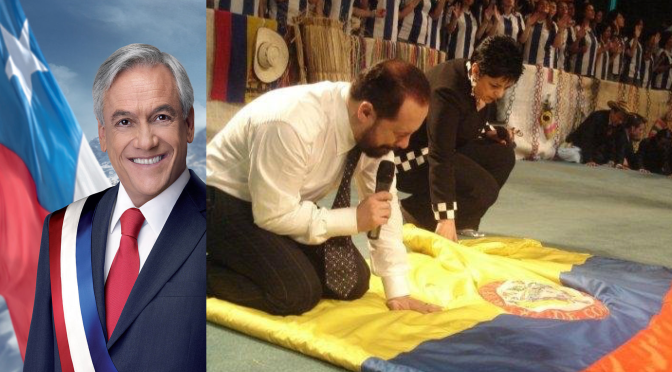
How Right-Wing Politicians Captured the Hearts of Pentecostals in Latin America

The last two years have been very important to Latin America concerning the relationship between religion and politics. In fact, there have been three significative cases in which evangelical-pentecostals have shown their will to participate in public debates.

First, there is the case of the 2016 impeachment against progressive president Dilma Rousseff in Brazil, led by the Pentecostal Assemblies of God congressman Eduardo Cunha, who besides belong to the so-called evangelical caucus, strongly conservative.

Second, there is the 2016 case of Peace Agreement in Colombia that intended to be a way to finish the war with FARC (Fuerzas Armadas Revolucionarias de Colombia), in which the Christian and particularly evangelical-pentecostal vote was an important factor for the victory of “no” option. The agreement considered the possibility for FARC to integrate into the political system, but this was not the most problematic issue for evangelicals. The agreement also considered issues like gender inclusion and LGBT demands. Continue reading How Right-Wing Politicians Captured the Hearts of Pentecostals in Latin America

Nine Common Beliefs about Pentecostals & Charismatics that are Totally False

Ever since rev. Campbell Morgan called Pentecostalism “the last vomit of Satan” and the Los Angeles Times warned the public about the “new sect of fanatics [that] is breaking loose” from Azusa Street, Spirit-filled Christians have had a bad rap. Other Christians as well as non-Christians oftentimes find us weird, and sometimes a bit dangerous. A lot of those perceptions are based on myths and misconceptions. Here are nine common beliefs about Pentecostals and Charismatics that are totally wrong.

1. It’s a small movement

Depending on where you’re located, the Pentecostal and Charismatic (P&C) movement might seem pretty small. But when you look at it on a global level, it turns out that 600 million people are P&Cs. 200 million are Pentecostals, 100 million are charismatic Catholics, and 300 million are charismatics in a big variety of denominations and churches. Since the number of P&Cs amounted to around zero in the beginning of the 20th century, the P&C movement is commonly described as the fastest growing religious movement in the world.

2. It’s a Cult

I’ve heard surprisingly many casually state “All of Pentecostalism is a cult”, to which I like to respond “That’s about as true as the statement ‘The moon is a tomato’.” Cult is not synonymous with “religion I don’t like”, it has an academic meaning of an isolated group with an authoritarian leader, and while there surely are several sad examples of charismatic churches that have developed into cults it is simply ridiculous to claim that we all would be part of some sort of Jonestown. At least that’s what my Leader tells me and he’s always infallible when he drinks goat blood.

Continue reading Nine Common Beliefs about Pentecostals & Charismatics that are Totally False

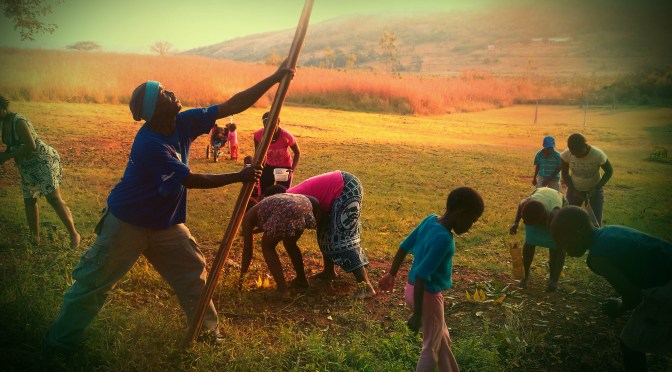
Is Pentecostalism Doing More for Africa’s Poor than International NGOs?

Review originally published at the LSE Africa Blog. Reposted with permission.

Gregory Deacon of Oxford University says that the book Pentecostalism and Development: Churches, NGOs and Social Change in Africa (edited by Dena Freeman) provides some compelling answers regarding Pentecostalism and development.

With its noisy churches and high profile media presence, Pentecostalism is religion writ large and exciting. Dramatic claims are made – for example that it is ‘redrawing the religious map of the world’.[1] Dena Freeman’s edited volume tackles head on whether this is good or bad for development. This is done in the context of 30 years of neoliberalism and an explosion in numbers of non-governmental organisations (NGOs) as well as Pentecostal churches. The role of both in alleviating poverty and improving living conditions for Africans is considered.

Over the past three decades, Pentecostal Christianity has exploded across Africa. At the same time many secular development agencies, including the UK’s Department for International Development (DFID), have been struggling to incorporate religion and faith based organisations into their policies and processes. As a research fellow at the University of Oxford looking at religion and development, I have similarly found Pentecostalism impossible to ignore. Continue reading Is Pentecostalism Doing More for Africa’s Poor than International NGOs?

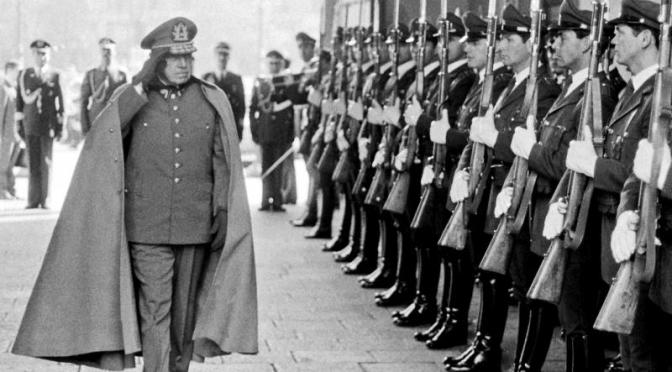
Chile’s Prophetic Pentecostals that Refused to Support Pinochet

Prophetic pentecostalism: the case, challenges and hopes

by Luis Aranguiz Kahn.

“Prophetic Pentecostalism” is the name that a particular group of Pentecostal believers put to distinguish themselves from the main Pentecostal branch in Chile. So, what was the difference? In first place, it is necessary to say that Pentecostals in Chile has been mainly conservative in terms of politics. Before the coup d’etat of Pinochet, they used to declare themselves “apolitical” to avoid the political struggle between the strong leftwing winds that ultimately took Allende to presidency in 1970 and the rightwing counterpart.

In the middle of this complex political context, appeared a different kind of Pentecostal that was not apolitical but openly leftist. Highly influenced by Liberation Theology, they then faced the dictatorship and at the same time went against the general Pentecostal tide. Meanwhile in 1974 many important leaders of the biggest Pentecostals churches of the country signed a public letter supporting Pinochet, this little group was resisting in its denomination (Mision Iglesia Pentecostal – MIP) and its communities.

Prophetic Pentecostals were also involved in ecumenical activity, something very strange to find in Pentecostals of that time given the many prejudices about the World Council of Churches and the suspicion of some kind of Marxist influence inside it. Those were times of a deep split among Christians. Chile, as a post-colonial State was largely influenced by USA not only in political terms, but also political, cultural and therefore religious. Continue reading Chile’s Prophetic Pentecostals that Refused to Support Pinochet