Tag Archives: Climate

Francis, the Pope Who Combined Charismatic Spirituality with Peace and Justice

Pope Francis has departed this earthly life, leaving behind a legacy of uniting signs and wonders with peace and justice! He was both the most charismatic and activist pope the Catholic Church has had in hundreds of years.

In truth, this shouldn’t be an unusual combination – Jesus Himself united pacifism and economic equality with healing the sick and performing miracles. But in our time, there is often a dividing line between Christians passionate about peace and justice and those who emphasize the gifts of the Spirit. For Francis, however, all of this was one and the same.

Few have missed that Francis is a passionate advocate for peace and justice: he has criticized capitalism for neglecting the poor, he lives simply and promotes economic equality, he has prayed for peace in the Middle East both at the Western wall and at the West Bank wall. But what not as many know is that Francis also is a charismatic pope, who believes in Spiritual gifts and who blesses both the Catholic charismatic renewal and Pentecostals.

I have previously written about how Francis stated in an interview that the charismatic movement is necessary for the church. In 2014, pope Francis attended a Catholic charismatic renewal convention in Rome, where he said:

I expect from you that you share with all, in the Church, the grace of Baptism in the Holy Spirit.

I expect from you an evangelization with the Word of God which proclaims that Jesus is alive and loves all men.

I expect that you give witness of spiritual ecumenism with all those brothers and sisters of other Churches and Christian communities who believe in Jesus as Lord and Savior.

[…]

Be close to the poor, the needy, to touch in their flesh the flesh of Jesus. Be close, please!

Later the same year, Francis visited a Pentecostal church, being the first pope ever to do that. He asked for forgiveness for the hostility that some Catholics has shown to Pentecostals:

“Among those who persecuted and denounced Pentecostals, almost as if they were crazy people trying to ruin the race, there were also Catholics. I am the pastor of Catholics, and I ask your forgiveness for those Catholic brothers and sisters who didn’t know and were tempted by the devil.”

 “Someone will be surprised: ‘The pope went to visit the evangelicals?’ But he went to see his brothers.”

Similarly to the saint from which he took his name, Francis of Assisi, pope Francis loved the poor and experienced amazing miracles. Even if there are many things I don’t agree with when it comes to Catholic theology, I truly rejoice when I see how pope Francis walks in the same tradition, following Jesus both when it comes to Spiritual baptism and social justice.

Micael Grenholm is a Swedish church historian, author and an editor for PCPJ.

ska%cc%88rmavbild-2017-01-06-kl-21-17-02

Pentecostals & Charismatics for Peace & Justice is a multicultural, gender inclusive, and ecumenical organization that promotes peace, justice, and reconciliation work among Pentecostal and Charismatic Christians around the world. If you like what we do, please become a member!

Christians Can No Longer Overlook the Disastrous Consequences of Climate Change

What’s the most pressing political issue Christians should care about today? There are many answers to that question, and different Christians have different priorities, but I want to argue that all Christians should put climate change very high on that list, if not at the top? The climate crisis impacts everything else.

Do you think the economy is important? Climate change will ruin it unless stopped. You think migration is an important issue? Climate change will cause billions of people to flee from their home. Does any other political issue have the top priority for you, like abortion, education or law and order? Climate change might ruin all modern civilizations and all the societal orders connected to them?

As stewards of God’s creation, Christians are called to protect and preserve the earth for future generations. In the face of accelerating global warming, the urgent need for climate action becomes not only a responsibility but a divine mandate. The current state of our planet, marked by rising temperatures, melting ice caps, and increasingly severe weather patterns, underscores a critical moment in human history. It is a moment that demands a collective response grounded in faith, compassion, and justice.

The Biblical Foundation for Environmental Stewardship

The Bible is rich with references that underscore the importance of caring for the environment. Genesis 2:15 teaches us, “The Lord God took the man and put him in the Garden of Eden to work it and take care of it.” This verse highlights our God-given role as caretakers of the earth, entrusted to us to nurture and protect.

Psalms 24:1 further reminds us, “The earth is the Lord’s, and everything in it, the world, and all who live in it.” This psalm beautifully articulates the concept of stewardship, emphasizing that we do not own the earth; rather, we are caretakers of God’s creation.

Continue reading Christians Can No Longer Overlook the Disastrous Consequences of Climate Change

The Best Thing You Can Do for the Climate is Probably the Opposite of What You Think

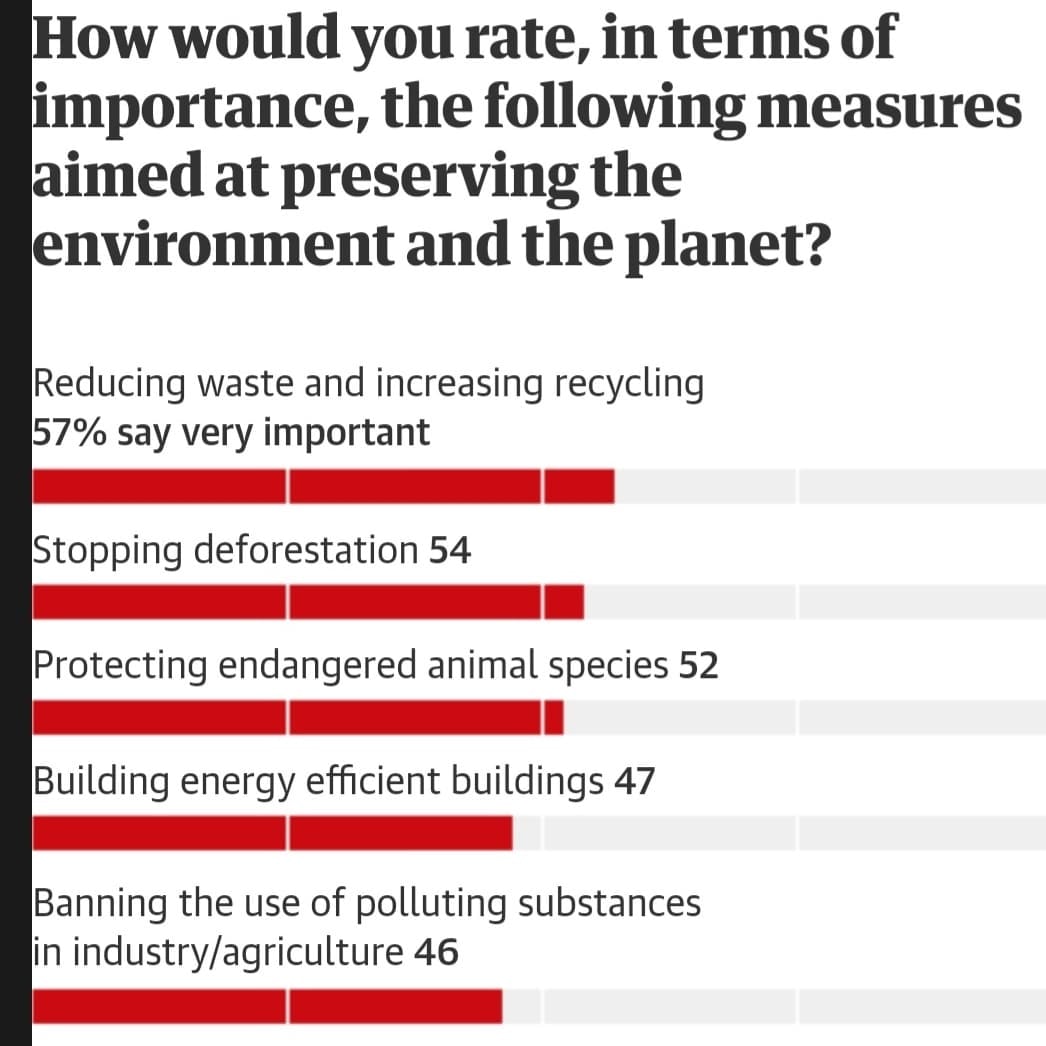
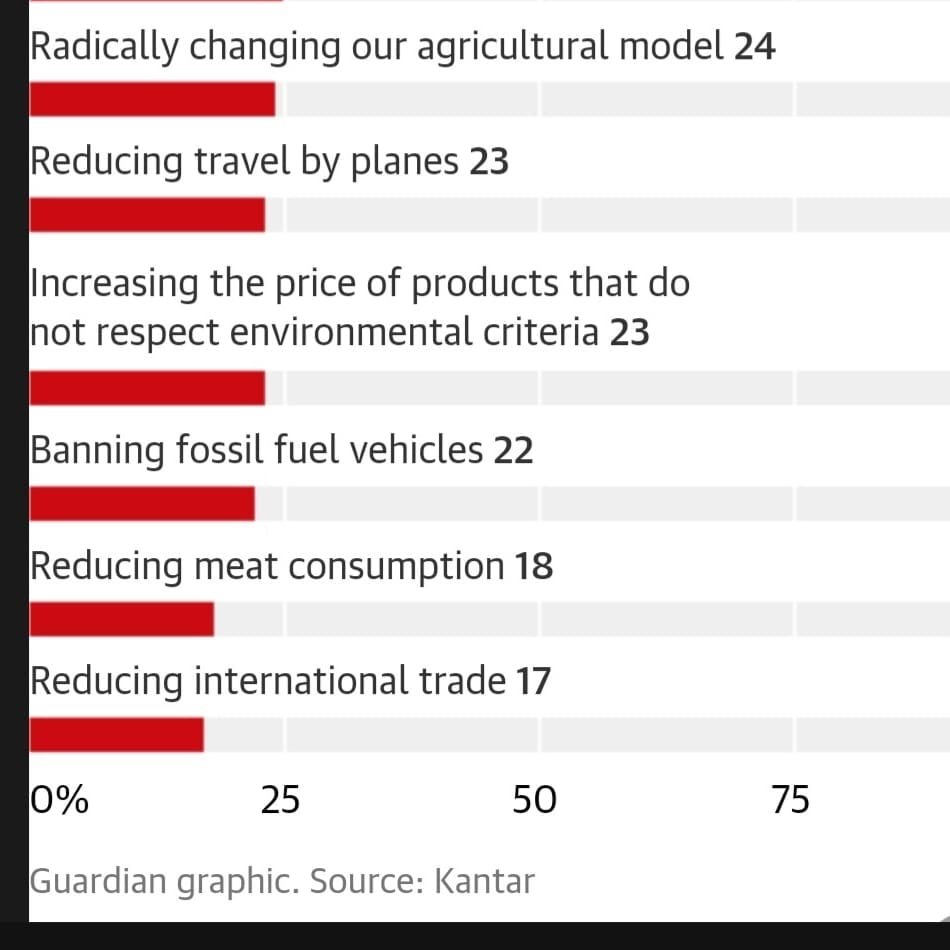
What is the most effective thing you can do as an individual to counteract climate change? According to a new opinion poll from Kantar Public, most westerners don’t know the true answer. Not only that – they believe the exact opposite of what is true.

According to residents of ten western countries, including the United States, Germany, and Sweden, recycling is the most common answer to what is “very important” for improving the climate, while reduced consumption and reduced meat consumption are the least common answers. Even reduced car use and flying were rarely described as very important by the respondents.

This is almost as if most people would walk around thinking that the most effective thing they can do to cross the Atlantic Ocean is to travel with a bamboo raft.

Four years ago, a study was published at Lund University that showed which individual life choices lead to the greatest reduction in one’s greenhouse gas emissions. It states that a year’s plant-free diet free of animal products is four times more efficient than recycling, refraining from a single transatlantic flight is eight times more efficient and living car-free for a year is eleven times more efficient.

Recycling may be useful, but it can certainly not be classified as the most important climate measure. Why then do most westerners claim that this is the case? Lobbying from the meat, car and aerospace industries is, of course, a culprit in the drama, as is the political rhetoric that, for fear of losing votes, often unscientifically insists that we maintain our food and transport habits.

But the study from Kantar also showed that an important factor is convenience. 74 percent of those surveyed said they were “proud” of what they are already doing for the climate—which I guess includes a lot of recycling. Instead of finding out what actually saves lives, you tell yourself and others that what you are already doing is the best possible.

We often assume that people first become convinced of things on an intellectual level, and then adapt their lifestyle accordingly. Sometimes it is so – I myself became an environmental activist after I had read about the state of the world in books – but it is at least as common that our opinions are adapted to how we live and what social contexts we belong to.

No wonder Jesus insisted that his disciples follow him, rather than just believing on a theoretical level.

Of course, opinion formation still has an important role to play, especially when it is now so clear that even many who are not climate threat deniers believe in ill-founded myths. But people need to be doers of the word, not just hearers, to quote the letter of James.

What is needed are communities where plant-based diets and car-free lives are as common and natural as recycling cardboard packaging. Research shows that people find it much easier to change their lifestyle when they do it in groups.

Here, the churches have a fantastic opportunity to step forward as such norm-changing communities. Just imagine what would happen if the world’s two billion Christians decided to live sustainably tomorrow.

Climate change would literally be over in just a day. So what are we waiting for?

Micael Grenholm is editor and contributor for PCPJ.

ska%cc%88rmavbild-2017-01-06-kl-21-17-02

Pentecostals & Charismatics for Peace & Justice is a multicultural, gender inclusive, and ecumenical organization that promotes peace, justice, and reconciliation work among Pentecostal and Charismatic Christians around the world. If you like what we do, please become a member!

How To Save the Climate: No Meat, No Air Travel, No Car and No Babies?

A new study from Lund University Centre for Sustainability Studies in Sweden has identified the four most efficient things one can do to reduce one’s greenhouse gas emissions. For us who have studied environmental issues they aren’t surprising, but for the general public they might come as a shock since most environmental organizations tend to emphasize other, less efficient actions when calling for a transition to a greener society. The four actions are:

1. Going Vegan

Eating a plant-based diet instead of a meaty one will save you approximately 0.8 tonnes of CO2-equivalents every year. That’s four times more than what you save if you always recycle, and eight times more than changing your lightbulbs to energy efficient ones. In fact, UN studies have shown that the meat and dairy industry account for 18 % of all greenhouse gas emissions, which is why the UN Environmental Program has urged the global population to eat more vegan food.

2. Skipping Air Travel

Air travel is a luxury, being experienced by only 6 % of the world’s population any given year. Every transatlantic trip one avoids saves 1.6 tonnes of CO2-equivalents.  A family abstaining from flying to hotter countries every other holiday will do a massive environmental heroic deed. Take the train if you want to go somewhere, or use the Internet to talk with people in other countries. Continue reading How To Save the Climate: No Meat, No Air Travel, No Car and No Babies?