
“Would you like to come to Germany?” I asked my communal brother Jacob when I had been invited to speak about peace theology in Nuremberg. “Jawohl!” he answered. So then we went to Kirchentag, Europe’s largest Christian conference, which is estimated to gather around 100,000 people.
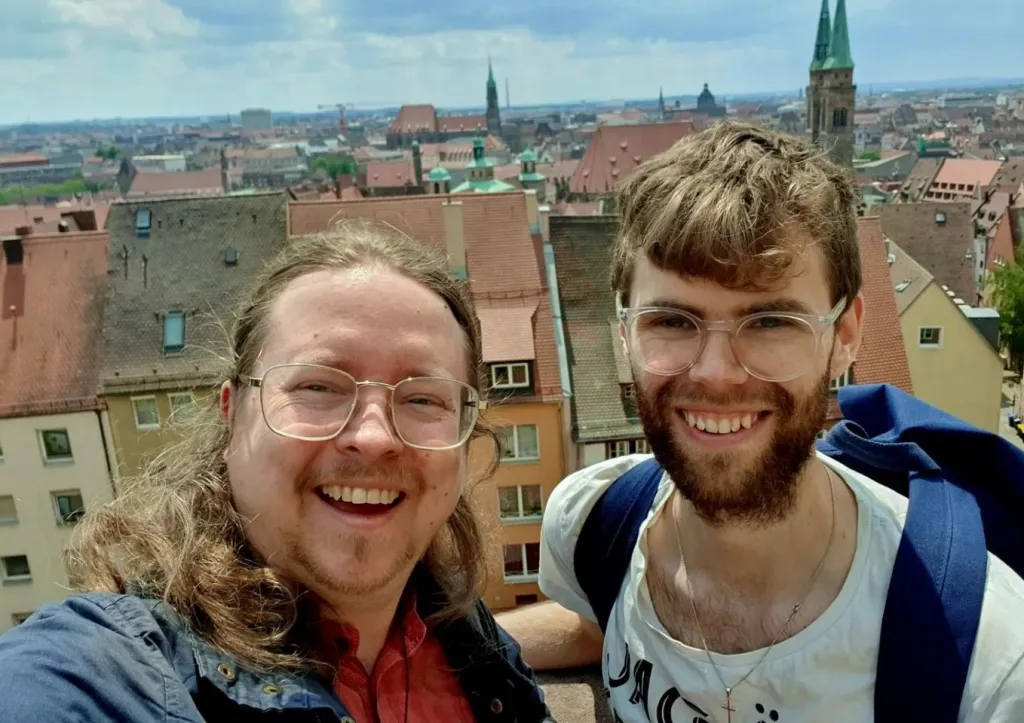
And of course, we took the train there! The best way to travel with consideration to the climate, the view, and opportunities for evangelism!
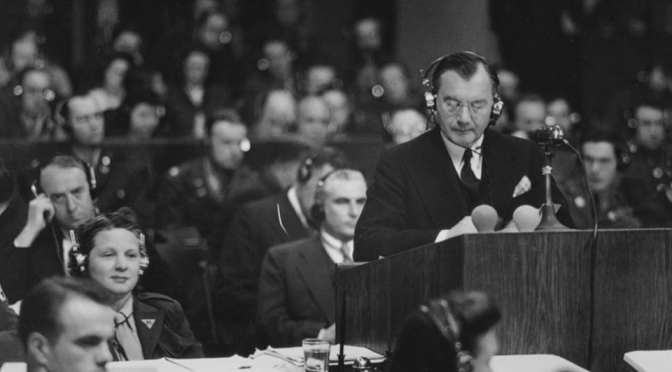
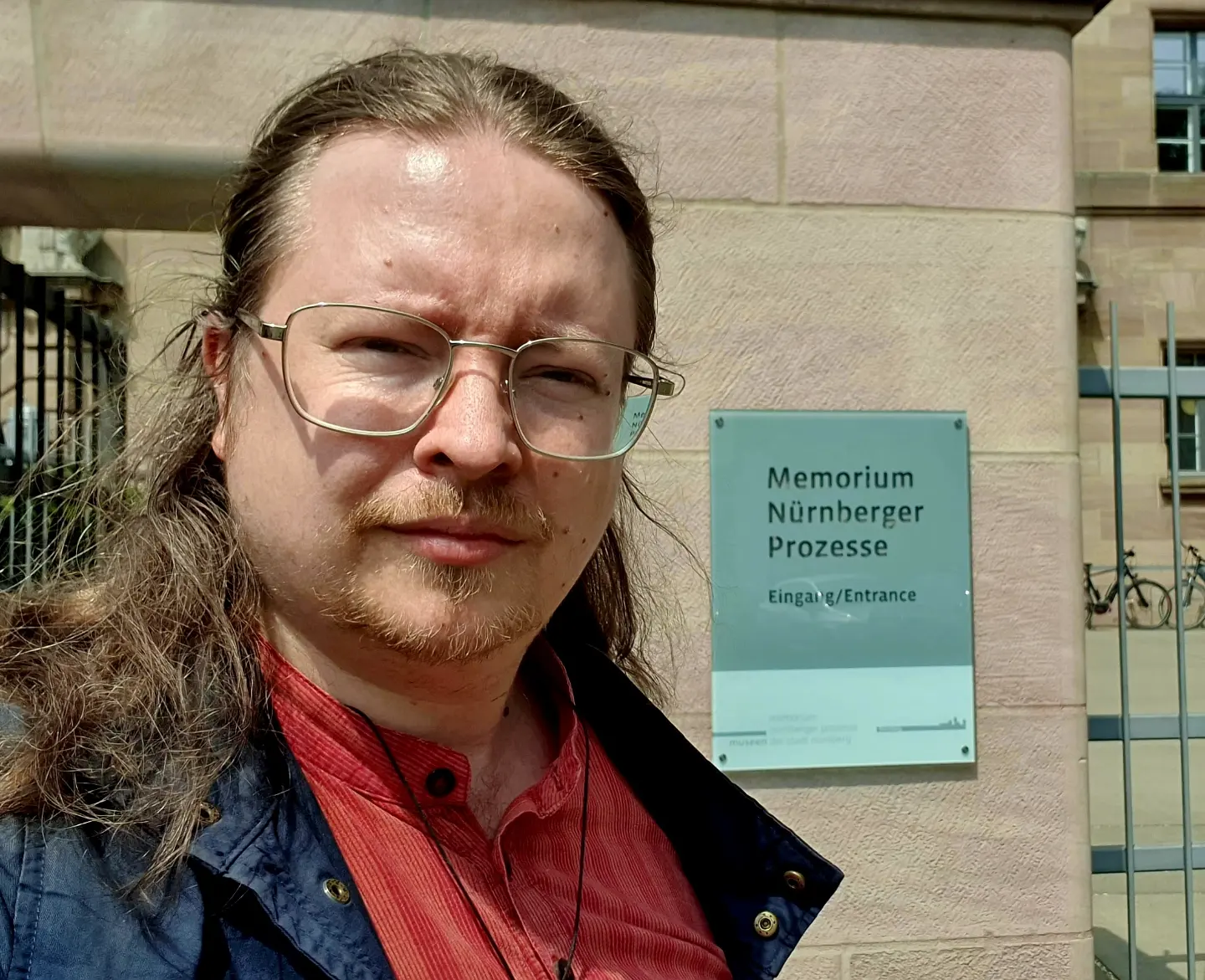
Once there, we visited the museum for the Nuremberg Trials – the place where several Nazis were convicted of crimes against humanity after World War II was over. They were not perfect trials, and they led to several death penalties, which in themselves are crimes against human rights, but despite their shortcomings, Nuremberg paved the way for the International Criminal Court and that politicians, like everyone else, can be held accountable for their actions.
Something that is really striking is how all the Nazis claimed to be innocent. They argued, partly, that the Holocaust was a war action parallel to how the Allied armies also massacred German civilians by bombing cities, and partly that they could not be held accountable for the genocide because they were just following orders.
But neither the “yes, but what about you” argument nor the “I was just doing my job” argument absolves us from moral responsibility for how we treat our fellow humans. Yet these arguments are often used by us non-Nazis to justify all kinds of bad behavior. Instead of taking responsibility for not living at the expense of the poor, overusing the Earth’s resources, or endangering refugees, we often reason that someone else is worse, and we are just doing our job. But how will the world ever become a better place if we only shift the blame?
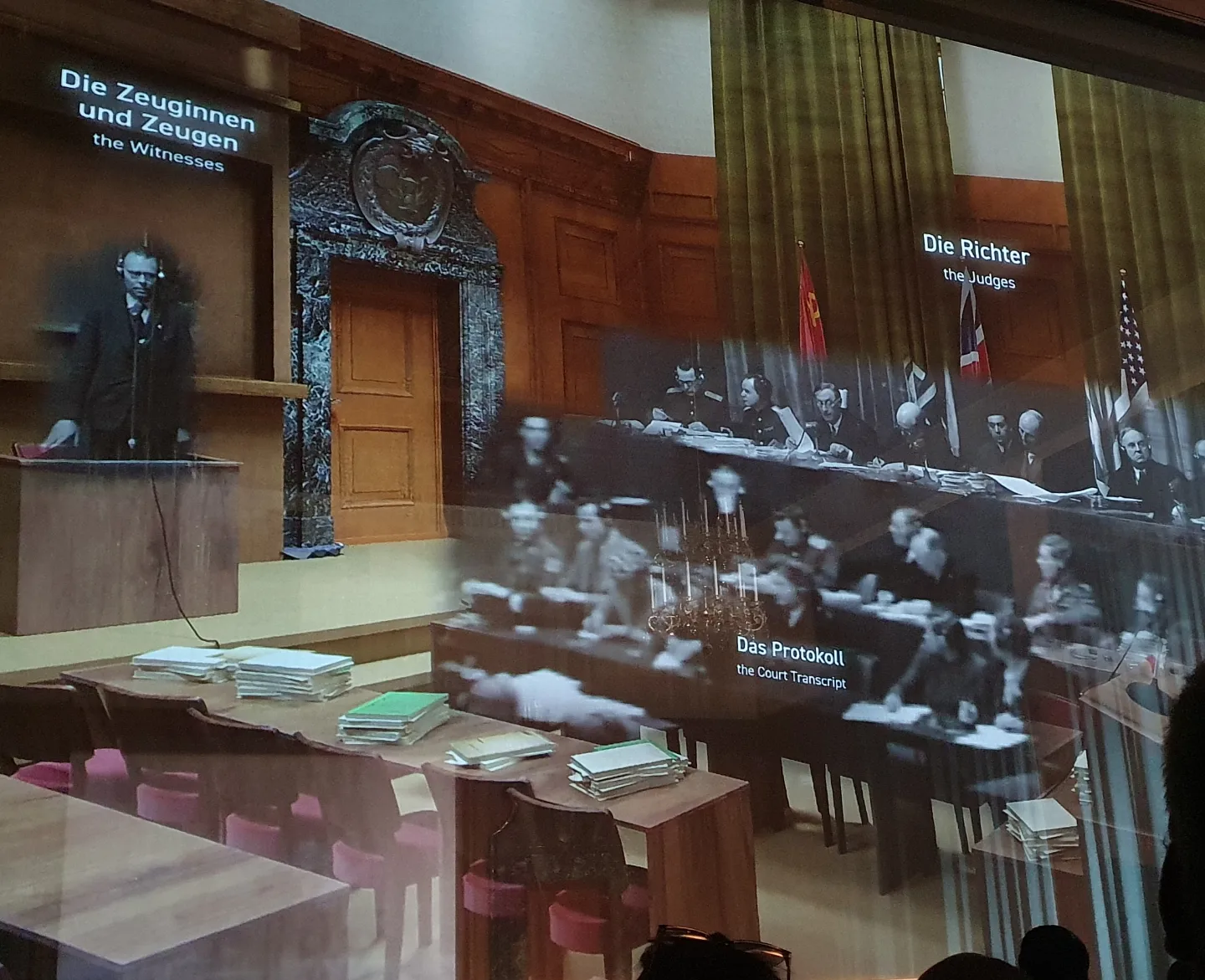
The Bible emphasizes that everyone is responsible for their deeds (Rom. 2:5-6). And thankfully, God offers forgiveness when we fall short and power through His Spirit to take greater responsibility to do good towards others (Eph. 2:8-10). It was powerful to see how the courtroom where the Nazis were tried was adorned with a crucifix. We truly need God’s help in these dark times to ensure that their terrible ideas disappear once and for all.
Now, comparing the Nazi excuse “I was just doing my job” and today’s similar excuses for various bad behaviors could be seen as unfair and in violation of Godwin’s Law. But there is no literal law against drawing parallels with Nazism and contemporary phenomena online, especially when the comparison starts from a museum about Nazism and includes the writer himself (I write us non-Nazis above). It is not forbidden to have such a conversation in real life, so why should it be forbidden on the Internet?
Godwin observed how absurd it was that almost every forum thread on the Internet in the 90s, no matter what it was about, led to people calling their opponent Hitler. There is no prohibition against discussing parallels between World War II and our time – on the contrary, the absence of such comparisons would be extremely dangerous!
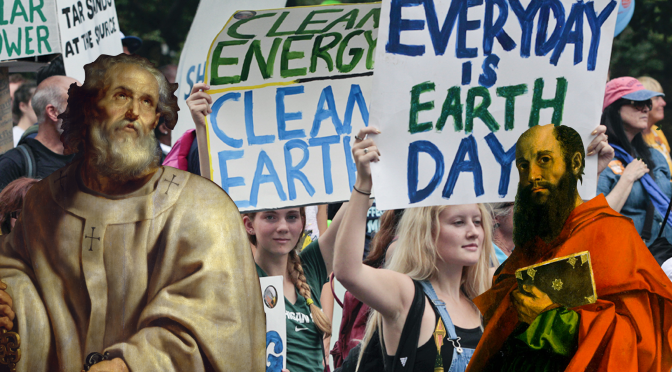
At the museum, I was struck by how bureaucratic and mundane the crimes of Nazism were, what Hannah Arendt called “the banality of evil”, where not only soldiers but also cleaners, drivers, factory workers, etc. were “just doing their job”. I think this is a very thoughtful comparison to how almost the whole society actively contributes to the climate crisis when too few are making changes – and the climate crisis risks killing not just six million people but several billion.
Knowing that what one is doing could contribute to several million or billion deaths, and not trying to change it but instead continuing, I absolutely think is parallel to contributing to genocide. But just as the Nuremberg Trials focused on those at the top of the hierarchy, the politicians and businessmen causing the largest emissions also bear the greatest responsibility. And we must never forget that whatever harm we cause, there is always forgiveness and transformation available in Jesus Christ!
Micael Grenholm is a Swedish church historian, author and an editor for PCPJ.

Pentecostals & Charismatics for Peace & Justice is a multicultural, gender inclusive, and ecumenical organization that promotes peace, justice, and reconciliation work among Pentecostal and Charismatic Christians around the world. If you like what we do, please become a member!


 PCPJ
PCPJ 