Blessed Are the Leakers

by Bob Ekblad. Originally published at his blog, reposted with permission.

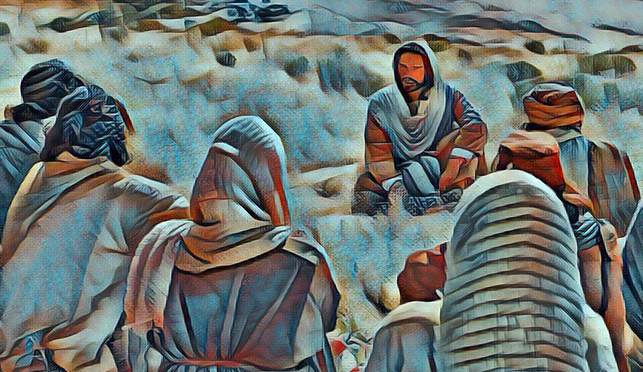
Followers of Jesus have a spiritual obligation to bring into the light offenses or injustices otherwise hidden from sight. While discernment is certainly needed in knowing how and when to speak, prohibiting leaks is like silencing the prophets, who in Scripture carried out a function in Israel similar yet far beyond that of WikiLeaks or the best investigative journalism.

Jesus himself taught: “Blessed are those who hunger and thirst for righteousness, for they shall be filled,” affirming all who long for truth and justice. This hunger and thirst will lead us to walk in the light ourselves through personal confession and repentance, and also to expose injustices that affect the vulnerable.

Think of confession of sin as the exposure of our own hidden secret attitudes and actions that the Holy Spirit brings up. The Spirit sounds our hearts, “leaking” our sins into our conscious awareness, bringing conviction and inviting confession, renunciation and new, life-giving choices. Continue reading Blessed Are the Leakers

Mutual Submission in a Christlike Marriage

One of the most challenging issues in the church is this idea that marriage involves a husband having authority OVER his wife.  I can’t tell you how many marriages have been harmed by this teaching and how often a marriage is reduced by teachings such as this.   Marriage is not a business or a corporation in which one person is leader over the other and decides what is best for another person.  Marriage is about two human beings being in an intimate relationship with one another within which each one is honored and respected.  It is in the family that we and our children learn how to live justly in community.  That is why mutual submission is so important.

This idea of husbands being in authority over a wife comes from the patriarchal ideals common in the first century when women were given to further the honor or wealth of a given family.  She was more of a traded commodity than a person.  In the first century women were considered less human, imperfect or less formed males, and inferior beings with less rational abilities.  They were also considered more easily deceived and childlike, therefore in need of a ruler. Continue reading Mutual Submission in a Christlike Marriage

Benny Hinn’s Nephew on Abandoning His Affluent Prosperity Lifestyle

Recently, Christianity Today published a very interesting piece by Costi Hinn. He describes how he and his family lived in unimaginable luxury due to the prosperity preaching of his uncle Benny Hinn. But when he got married, he started to have doubts concerning the health and wealth theology.

That year was a whirlwind tour of luxury: $25,000-a-night royal suites in Dubai, seaside resorts in Greece, tours of the Swiss Alps, villas on Lake Como in Italy, basking on the golden coast of Australia, shopping sprees at Harrods in London, and numerous trips to Israel, Hawaii, and everywhere in between. The pay was great, we flew on our own private Gulfstream, and I got to buy custom suits. All I had to do was catch people and look spiritual!

Read the whole article here.

The Jesus Agenda

by Craig M. Watts. Originally published at The Yoke, reposted with permission.

Clarity brings trouble.

Picture

Few ministers would bother preaching a second sermon if they got the reaction Jesus received after his first one in his hometown synagogue. Many preachers have had people respond to a message with anger but not with attempts on their lives. Jesus roused passions with his preaching. And some of those passions were deadly. Continue reading The Jesus Agenda

Black Lives Don’t Matter As Much As the National Anthem

by Ramone Romero.

It seems sometimes that in the national debate about #TakeAKnee the focus has become about “the flag” and “the anthem”, and it is often being forgotten that #TakeAKnee is a protest about the systemic injustices of law enforcement against people of color.

Yet even if that is forgotten in the news and chatter, this is still intensely about race.

The #TakeAKnee protests in the NFL (and spreading across the sports world) are offensive precisely because they began with black athletes.

The offense people are taking as disrespect to the flag, the anthem and to “America” itself comes because these are black athletes protesting.

How dare they interrupt the anthem?
How dare they not salute the flag in the way we want?
How dare they draw any amount of attention to themselves?
How dare they interrupt our holy moment of nationalistic worship?

Continue reading Black Lives Don’t Matter As Much As the National Anthem

Why Aren’t There More Female Pentecostal Pastors?

by Cecil M. Robeck Jr. Originally published here, reposted with permission.

The modern Pentecostal movement is a child of the radical wing of the Holiness movement, which championed the doctrine of sanctification as a second, definite work of grace. The Holiness movement was very active in works of social justice, including but not limited to various compassionate ministries, interracial work, temperance, and women’s suffrage. Especially from 1850 onward, it produced a number of women who ministered as evangelists, Bible study leaders, and even a bishop. Mrs. Alma White had been a popular Methodist preacher who participated in the Metropolitan Church Association, one of many such Holiness associations. Ultimately, Alma left both groups and founded the Pillar of Fire Church. She was consecrated a bishop by the Holiness evangelist William Godbey.

With this kind of backdrop to the Pentecostal movement in the United States, it would seem likely that women would play a significant role. And so they did. Charles Fox Parham trained women for ministry in his Apostolic Faith Movement from 1900 onward. His sister-in-law, Lilian Thistlewaite, held meetings of her own throughout the midwest and appeared alongside Parham in extended meetings elsewhere. Parham commissioned a number of women to establish church plants and serve as pastors.

The African American preacher William Joseph Seymour brought the Apostolic Faith Movement to Los Angeles in 1906. His Azusa Street Mission quickly became known as an interracial congregation led by an African American pastor, with capable women and men providing leadership and outreach. The Mission was even ridiculed on the front page of the Los Angeles Evening News, July 23, 1906, for violating Paul’s command in 1 Corinthians 14:34 regarding the silence of women. Continue reading Why Aren’t There More Female Pentecostal Pastors?

The Good Christian Woman’s Life

by Rachel Stella, originally published here.

I woke up around 3:30 a.m. Sunday, May 10, 2015, to the loud beeping of a text message. Normally I silence my phone when I go to bed, but I had just gotten a promotion at work. I was one of the newsroom editors now, and even though no one had told me I was obligated to be on call 24/7, I felt responsible to be ready to handle major breaking news over the weekends.

“Downtown Utica is on fire. I’m getting photos now.”

I had told Scott, our photographer, to contact me first if anything crazy happened on weekends, because I thought the other hardworking staff should get a break. He had done what I had asked him to do. Even so, I was irritated at being aroused from a deep sleep. Not irritated at Scott, but irritated that this was happening. And scared for Utica. (That poor little town had already experienced a deadly tornado and some awful flooding.) I probably let out a nasty word or two as I adjusted to the reality. I wasn’t raised that way, but — confession time — potty mouth has developed from living alone.

I threw a jacket over whatever I was wearing and walked the two blocks to the newsroom, where I plunked into my chair and hastily assembled a brief story with a photo sent by Scott to put on our website and link to on our Facebook and Twitter pages. Continue reading The Good Christian Woman’s Life

The Gift of Provocation? Tertullian Certainly Had It!

Tertullian (full name Quintus Septimius Florens Tertullianus) was born at Carthage in North Africa around AD 155, son of a Roman centurion. He trained as a lawyer and had a razor-sharp mind. Little of his early life is known, but at about 40 he became a Christian. Immediately, he began to write – and Christendom hardly knew what had hit it!

He didn’t ‘do’ much reasoned theology; he confronted. Wrong teachings, sloppy morals, lax leaders, cowardly faith, Tertullian laid into them all. His writing is passionate, with holy sarcasm – and at times still funny even today. You sense a ‘wildness’, a burning heart for integrity and justice, contemptuous of all compromise. Here are some examples:

At a time of fierce persecution, when many favoured fleeing, he wrote: The blood of the martyrs is [the] seed [of the church], adding that once you start fleeing, you will never stop fleeing!

Seeing the growing emphasis on education in church leadership, he cried: What has Athens [headquarters of Greek philosophy] got to do with Jerusalem!

He took aim at worldly pursuits: All public entertainment damages the spirit.

He castigated the folly of persecutors: If the Tiber rises too high, or the Nile too low, the remedy is always to feed Christians to the lions.

He understood the fleshly human nature that he was confronting: The first reaction to truth is hatred.

Perhaps most biting of all is his judgement on self-centred living: Whoever lives only to benefit himself, benefits the world only when he dies!

Yet Tertullian was more than a polemicist. He was deeply conscious of his personal failings; once, he wrote a piece on patience because he knew he had to learn it. Continue reading The Gift of Provocation? Tertullian Certainly Had It!

Is Pentecostalism Dispensationalist?

by Tony Richie. Part 1 of 3. Read the whole article as a PDF here.

Introduction

A surging crisis on the current global horizon centers on so-called “Christian Zionism.” The controversy surrounding Christian Zionism arises from its association with political practices in the unceasingly and increasingly unstable Middle East region involving Israelis and Palestinians. Though an oversimplification, Christian Zionism is generally speaking a theological position with political implications.

However, Christian Zionism is exceedingly difficult to address because it exists in variegated forms, ranging from individuals or groups who generally support the right of contemporary Israelis to exist in their ancient homeland to extensively organized political activists with agendas of varying degrees of radicalism.[1]

The former usually cite biblical and humanitarian values in vindication of their support for Israel. Some of the latter tend to be completely uncritical of Israeli policies and practices, openly aggressive against their opponents, and either totally unaware of or unconcerned with the plight of Palestinians and religious others. Much of the basis for the latter position appears to be built upon a specific form of dispensationalist ideology. Continue reading Is Pentecostalism Dispensationalist?

The Politics of Pentecostalism

by Luis Aránguiz Kahn. Originally published at Pensimiento Pentecostal.

Pentecostalism is a movement that surged in the beginning of the 20th century simultaneously in different parts of the world and in the middle of the diversity of the protestant and evangelical churches. In general terms, its social base was made of the poor, marginalized and discriminated. In the case of South America, there were two points of beginning. In Brazil by the hand of Luigi Fransescon, and in Chile it was brought about by Willis Hoover. From there on the movement has expanded geographically to the entire Southern Cone, but it has also had a notable quantitative growth in the different countries in the zone. There has also been an influence from external Pentecostalism, especially from The United States.

By the nature of movement there coexists an ample heterogeneity of churches, practices and believes in the interior of the Pentecostalism. This, in methodological terms, complicates the analysis of the phenomenon and the possibility of offering an explanation that stretches over its diversity. Therefore once more, if we speak in general terms, it is possible to notice that the Pentecostalism has arisen from a political derivation that can reveal itself in two ways, and which will not be unknown to anyone familiar in any way with this type of church.

On the one hand, it is possible to observe the existence of a Pentecostalism which calls itself “apolitical”. Within this category every church and believer would fit who, in the name of a moral dualism which sees the behaviors of non-Christians as mundane, rejects the political field (especially in its partisan version ) by considering it mundane, that is to say sinful. In those who maintain this form of thinking, there exists a tendency to reaffirm the status quo. Even when the political field is avoided, the “apoliticals” tend to champion the political groups which uphold the conservation of order.

In this way, for example, it is not strange to encounter Pentecostals who support anti-Marxist dictatorships in the previous century, as seen in the cases of Guatemala and Chile. In the same way today it is possible to encounter Pentecostals who support parties which are morally conservative, in order to avoid legislations which approve homosexual marriage, abortion and euthanasia. In a certain way, whether they want it or not, the “apoliticism” ends up being more a distant horizon than a way of living, well examples like these show that although one avoids forming parties or participate in them, inevitably one will participate in the public square. Therefore the query that remains is understanding this apoliticism as a fundamentally political act. Continue reading The Politics of Pentecostalism

Pentecostals & Charismatics for Peace & Justice