Tag Archives: Bible study

Why You Shouldn’t Keep Your Wealth for Yourself as a Christian

Let us end our little blog series on why wealth is wrong. We have already looked at the mathematical argument, where we saw that it is impossible to keep wealth while giving the same wealth to the poor. Then we discussed the economic argument, which says that it is better to invest in goods and services beneficial for the poor rather than superfluities like luxury and entertainment. And last time, I brought up the Bill Gates argument, which states that it is the quantity of what we keep, rather than what we give away, that measures our generosity.

In each post we have started with an argument for why wealth is right, and we shall do the same in this post. The most common moral argument I hear when people defend wealth is: “Rich people have worked hard for their wealth, and deserve therefore to have it and do what they please with it.” It is often combined with “We only have a moral obligation for ourselves and our families, not for the entire world.”

The moral argument for why wealth is wrong, on the other hand, is brilliantly summarized by the apostle John: “If anyone has material possessions and sees a brother or sister in need but has no pity on them, how can the love of God be in that person?” (1 Jn 3:17). As I explained in my article about a Christian World Vision, Jesus-followers should without doubt apply the same moral standpoint on non-believers as well. Continue reading Why You Shouldn’t Keep Your Wealth for Yourself as a Christian

Why Wealth is Wrong: The Mathematical Argument

112In my God vs Wealth series and God vs Inequality E-book, I’ve mostly based my arguments for why Christians shouldn’t be rich on Bible study, as well as a bit of early church history.

However, I have noticed that many Christians who defend their personal wealth do not just use the Bible, but also theoretical arguments that are based on economics, ethics and experience. Most of them are quite easy to counter with other arguments in the same field for why wealth is wrong. So in a couple of blog posts, I would like to discuss some of these arguments for and against wealth, while also connecting them to the Bible.

The first argument I often hear is “You need to be rich in order to give money to the poor” or, alternatively, “It’s good to give money to the poor, but there’s nothing wrong with being rich.” Now, I could agree with the first statement if we define rich as “having an income that exceeds one’s own/family’s needs” because then, per definition, only rich people will be able to give money to the poor without harming themselves or their families.

Continue reading Why Wealth is Wrong: The Mathematical Argument

Let Women Speak in the Assembly: Towards the Inclusion of Women in Verbal Ministries

by Lora Angeline Timenia, originally published at Engaged Pentecostalism.

The Acts community gives us a wonderful picture of women being actively part of the community of the Lord in the last days. In Biblical times, the idea of female speakers was acceptable due to God’s use of prophetesses like Sarah, Deborah, Miriam, and Huldah. Luke, the evangelist who wrote the two-volume corpus, Luke-Acts, even began his Gospel with a series of prophecies uttered by the most unlikely women: the barren, the widowed, and the pregnant-before-marriage. Amid societal taboos, God displayed a unique reversal of norms, when he spoke through the barren Elizabeth, the widowed Anna, and the virgin, Mary. Clearly, the Bible demonstrates that God uses women as agents of his revelation.

Eschatological Reversal

Unfortunately today, some churches, who stand by a traditional male hierarchy view, do not permit women to speak as pastor-teachers or preachers. In my opinion, these groups miss out on the fullness of what God wants do in their assemblies. Deborah was a judge in the Old Testament, who prophesied, taught, counseled, and even led the community to victory (Judges 4). What can they say about Deborah’s role? What can they say about the role of Philipp’s prophesying daughters in Acts? Could it be that people who do not permit women to speak in the assembly do not recognize the eschatological reversal that God initiated when Jesus triumphed over sin and death? Continue reading Let Women Speak in the Assembly: Towards the Inclusion of Women in Verbal Ministries

Signs, Wonders and Social Justice

You know what’s awesome? Miracles! You know what’s also awesome? Social justice! Let’s combine the two, like Jesus did. The Spiritual gifts that God has equipped His church with are supposed to be used to serve others (1 Peter 4:10), and obviously our activism for a more equal and just world will be even more effective when the Holy Spirit empowers us with supernatural abilities. A couple of years ago, I held a lecture on this idea of charismactivism:

It’s obvious that miracles and social justice go hand-in-hand in the Holy Scriptures: the Old Testament prophets exercised many miraculous gifts while promoting the rights of the poor and marginalised (see for example the book of Amos); Jesus healed the sick and cast out demons right before His famous Sermon on the Mount about social ethics (Mt 5); and as the apostolic church was filled with the Holy Spirit and spoke in tongues they eradicated the gap between rich and poor through community of goods (Acts 2).

In the lecture, I go through these and other relevant Bible passages, as well as sharing testimonies from people today who combine miracles and social justice, like Simon Adahl and Heidi Baker. I also bring up and criticize theologians and philosophers who deny the existence of miracles (or at least its presence in the life of the ordinary believer), like David Hume, Rudolf Bultmann and John MacArthur. Enjoy the video!

ska%cc%88rmavbild-2017-01-06-kl-21-17-02Pentecostals & Charismatics for Peace & Justice is a multicultural, gender inclusive, and ecumenical organization that promotes peace, justice, and reconciliation work among Pentecostal and Charismatic Christians around the world. If you like what we do, please become a member!

Peacemaking in Gaza: Abraham’s Model

by Bob Ekblad, originally published on his blog.

Violence in Gaza is once again on the rise as the Israeli Defense Forces battle Palestinian protesters outraged by inhumane living conditions in what is often referred to as the world’s largest outdoor prison. The last time tensions flared Israel brutally bombed Gaza in response to Hamas’ missile attacks in 2014— killing over 2000 Palestinians and wounding thousands more. The story of Abraham’s conflict and reconciliation with the ancient king of Philistia (located in modern day Gaza) in Genesis 20-21 is an invitation to Jews, Muslims and Christians to each other through the eyes of faith.

Genesis 20 tells the infamous story of Abraham’s residence as an alien in Gerar, where he lies to Abimelech, king of Philistia, about the identity of his wife Sarah, saying she was his sister. Abraham expects the worst from this foreign king, assuming he will kill him and take Sarah for himself– since she is so beautiful. But after Abimelech takes Sarah into his harem God confronts him in a dream and Abimelech proves attentive. He dialogues with God, defending himself as innocent– and God affirms his integrity (20:5-6).  Abimelech confronts Abraham about his lie: “You have done to me things that ought not to be done” (v. 10). He gives Sarah back along with many gifts, 1000 pieces of silver and a welcome to settle wherever they please (20:14-15).  Continue reading Peacemaking in Gaza: Abraham’s Model

Mary and Money

by Paul Alexander. Originally posted at Evangelicals for Social Action.

Jesus’ mom rocks. In Luke 1, Mary has the nerve to say that, because God is at work in the world, “The hungry have been filled with good things and the rich sent away empty-handed.” Very few people have the courage to say that God is at work to send the rich away with empty hands. Neither Democrats nor Republicans dare talk this way about rich people. (Full disclosure: I am rich.)

When a young Palestinian Jewish girl in occupied Galilee is filled with the Spirit to carry, birth, and rear the Messiah, amazingly bold things get declared. This teenage phenom from the backside of the Roman Empire made a claim that can be reacted to in at least two ways. Continue reading Mary and Money

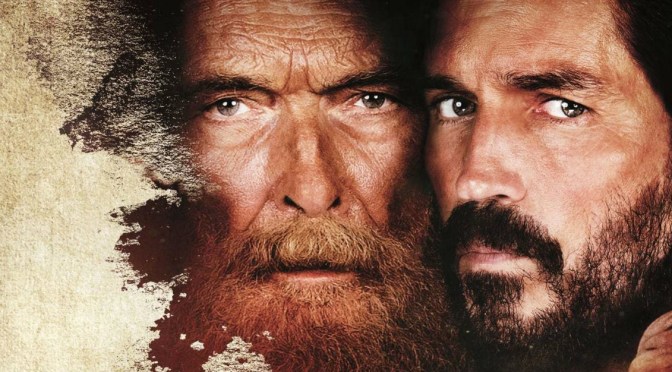
Biblical Accuracy and Nonviolence in Paul: Apostle of Christ – Movie Review

by Craig Keener, originally posted on his blog.

Here are my first impressions of Paul: Apostle of Christ. First of all, I am very grateful that such films are being made. That gratitude overwhelms reservations on any other points. As you might guess (because I am a biblical scholar), movies about biblical themes are my favorite, and among the few kinds of movies I must see.

The various scenes of Rome are splendidly done; they make ancient Rome look like ancient Rome. For modern viewers far removed from the world of the New Testament, this provides an invaluable benefit. The film also dramatically captures the horror of people being murdered for their faith (or because the powerful in society deem them expendable). I appreciated the numerous echoes of Paul’s letters (and a crack about the Corinthians), although sometimes when Paul tells Luke to write something down it comes from Paul’s earlier letters, not from Acts. Continue reading Biblical Accuracy and Nonviolence in Paul: Apostle of Christ – Movie Review

Challenging Prosperity Theology and Legalism in Africa

by Bob Ekblad, originally published on his blog.

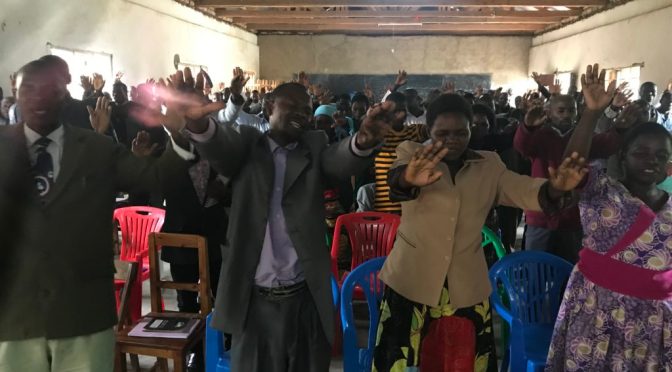
For the past two weeks Gracie and I have ministered alongside our African partners to run four-day trainings for pastors and leaders in Kenya, Tanzania and Zimbabwe. We have been delighted to see widespread negative images of God dramatically give way to our teachings and group Bible studies on God’s love and grace, exciting us to further equip people to proclaim good news.

Negative images of God are common in places of poverty and hardship. Christians, Muslims and adherents of traditional African religions are all inclined towards legalism and performance. Known “sinners” usually do not feel welcomed in church services, until they first make required changes. Once inside the church they will often hear messages of condemnation, and promises that a life of purity and sacrifice will lead to financial and personal success. Continue reading Challenging Prosperity Theology and Legalism in Africa

Philoxenia: Love of the Stranger

What is Philoxenia? When I first heard this word, I wondered if I had just stumbled upon a new kind of flower, Philoxenia… sort of like a Xenia or phlox or a Xenia crossed with a phlox to create a whole new flower.  It’s not a flower, it is the Greek word for Hospitality.  It literally means Philo or Love; Xenia or Stranger; put together it means LOVE OF STRANGER. 

Hospitality then is the act of making strangers feel loved, as if they belong, welcome—like family.  Hospitality is another thread that is woven throughout the entire Bible. 

Growing up in the church, hospitality was more about making sure the coffee was on and the donuts and cookies were placed out on the serving table.  We had a hospitality committee, usually made up of women, who made sure there were plenty of good things to eat and coffee to drink—cool-aid for the children and decaf for the senior folks.  And we would gather in the fellowship hall after the morning service to share in a time of “fellowship”.  Because what else would one do in a fellowship hall?  I loved this time because it meant that I could play just a bit longer with my friends before we all went home for Sunday dinner.  Continue reading Philoxenia: Love of the Stranger

Sell Everything You Have, and Give It to the Poor!

by Bram Cools, originally published on his blog.

Recently I’ve been finishing an older collection of songs with titles like ‘sell everything you have and give it to the poor’. (downloadlink to Safe Happy Christian Music for the Conservative Middleclass).
People have asked me before why I wrote the song, and what I think about the bible verses that it’s based on, so maybe it’s a good idea to clarify a bit with some bible study about Christ and money, or riches in general.

Let’s start with the song, which can be listened here. Music-wise it’s basically a very simple folk song in an American style, so simple that anyone who has had a few lessons on a guitar can easily play it (please do! It’s only G, C and D). The lyrics are a simple retelling of a story in the gospels that is often called ‘the rich young ruler’ in English, a passage found in all three synoptic gospels (Mark 10:17-27, Matthew 19:16-22, Luke 18:18-34): Continue reading Sell Everything You Have, and Give It to the Poor!