

Russell Moore used to be one of the top officials of the Southern Baptist Convention and is currently the Editor in Chief of Christianity Today. Last year, he was interviewed by NPR and explained why he thinks American Christianity is in crisis:

It was the result of having multiple pastors tell me, essentially, the same story about quoting the Sermon on the Mount, parenthetically, in their preaching — “turn the other cheek” — [and] to have someone come up after to say, “Where did you get those liberal talking points?”
And what was alarming to me is that in most of these scenarios, when the pastor would say, “I’m literally quoting Jesus Christ,” the response would not be, “I apologize.” The response would be, “Yes, but that doesn’t work anymore. That’s weak.” And when we get to the point where the teachings of Jesus himself are seen as subversive to us, then we’re in a crisis.
I’m sure many want to discard this as some extreme, uncommon view among a very small minority of church goers, in spite of Moore telling us that multiple pastors has told him similar stories. However, the vital question is not how many evangelicals have a heretical view of Jesus’ words and teaching, but how this situation could even arise in the first place.
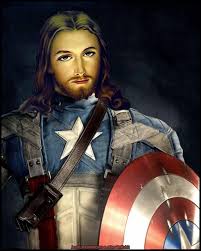
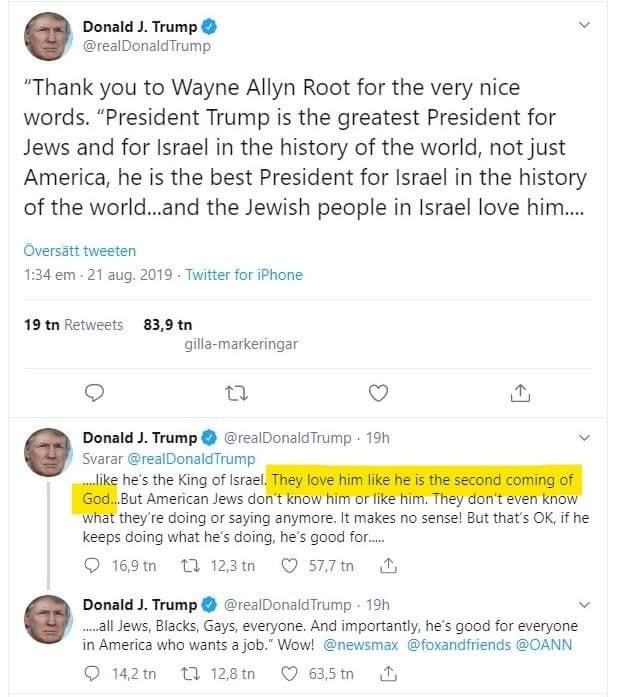
And it’s not that mysterious when you think about it, is it? Moore himself has been a vocal critic of Donald Trump and what the support for him among white evangelicals has done with their movement. With his adultery, sex with pornstars, constant lies, mocking of disabled people, hate against immigrants, disrespect for the poor and other sins, Trump is extremely unlike Jesus. Yet, he is constantly portrayed by many evangelicals as the one to save the country, sometimes in very blasphemous ways, which Trump himself makes sure to capitalize on:

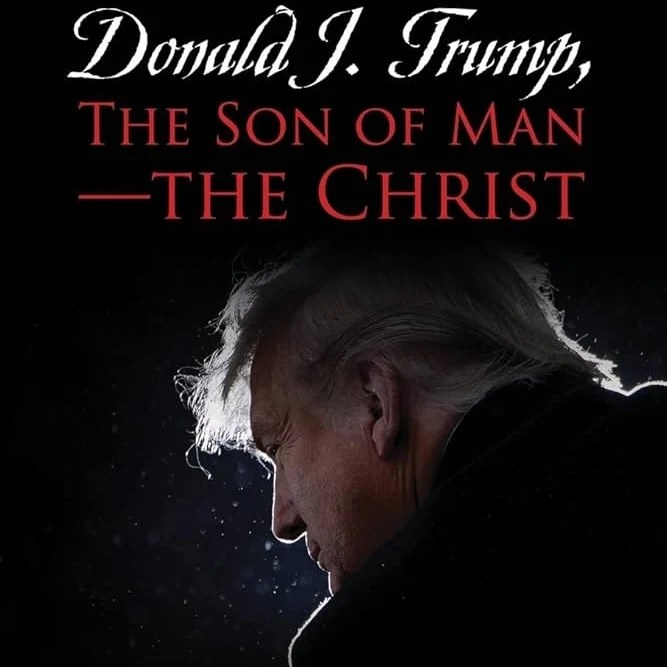



And so, it’s not strange that when some evangelicals who are told over and over again that a Christian champion looks like Trump cannot recognize the true Jesus. As Russell Moore said in the very same interview:
I think if we’re going to get past the blood and soil sorts of nationalism or all of the other kinds of kinds of totalizing cultural identities, it’s going to require rethinking what the church is. And I don’t think that’s something new. I think it’s very old. I think it’s recovering a first-century understanding of what it means to be the church.
Micael Grenholm is a Swedish church historian, author and an editor for PCPJ.

Pentecostals & Charismatics for Peace & Justice is a multicultural, gender inclusive, and ecumenical organization that promotes peace, justice, and reconciliation work among Pentecostal and Charismatic Christians around the world. If you like what we do, please become a member!



 PCPJ
PCPJ 