Archive for the ‘peacemaking’ Category

Christ at the Checkpoint: Theology in the Service of Justice and Peace

Christ at the Checkpoint: Theology in the Service of Justice and Peace (Eugene, OR: Pickwick, 2012)

Paul Alexander, Editor

“Few international issues are more urgent than a just settlement of the Israeli-Palestinian conflict. And few issues divide evangelicals so severely. This is an important book where key evangelical scholars with differing views dialogue respectfully and carefully about central disagreements. The result clarifies difficult, complex issues and points the way toward a just solution.”

Ronald J. Sider
Professor of Theology, Palmer Theological Seminary, Eastern University
President, Evangelicals for Social Action

“At a time when Evangelicalism in general, and the Charismatic movement in particular, are in danger of being absorbed by a Dispensationalist theology that legitimates the removal of Arabs from the Holy Land, this book serves as a balance and necessary corrective.  Those who believe that the Bible calls for justice for both Jews and Palestinians (and specifically our Palestinian brothers and sisters in Christ) will find substantial support from its writers.”

-Tony Campolo, Emeritus Professor of Sociology, Eastern University

Contributors include: Paul Alexander, Alex Awad, Sami Awad, Darrell Bock, Gary Burge, Tony Campolo, Mae Elise Cannon, Yohanna Katanacho, Jonathan Kuttab, Manfred Kohl, Salim Munayer, and Mitri Raheb

Preface to “Christ at the Checkpoint” book

I’ve just finished editing a book that will be coming out next spring, Christ at the Checkpoint: Theology in the Service of Justice and Peace (Eugene, OR: Pickwick Publications, 2012). It’s a collection of many of the presentations from the Christ at the Checkpoint 2010 conference. Here’s the preface that I wrote for it.

~~~~~~~~

This book is a work of love. The Palestinian Christians who organized the conference at which these essays were presented are motivated by their love for God, their love for Israelis, and their love for their fellow Palestinians. In March 2010 the Christ at the Checkpoint conference in Bethlehem brought together evangelical theologians, biblical scholars, pastors, activists, and others in an unprecedented way to discuss the situation in Palestine and Israel. Many others from various Christian traditions have reflected on these issues, as have many from the Jewish and Muslim faiths. But Christ at the Checkpoint: Theology in the Service of Justice and Peace was organized and hosted by Palestinian evangelicals. The goals of the conference were and are stated as follows.

The aim of Christ at the Checkpoint is to provide an opportunity for evangelical Christians who take the Bible seriously to prayerfully seek a proper awareness of issues of peace, justice, and reconciliation. The conference will: 1) Empower and encourage the Palestinian church. 2) Expose the realities of the injustices in the Palestinian Territories and create awareness of the obstacles to reconciliation and peace. 3) Create a platform for serious engagement with Christian Zionism and an open forum for ongoing dialogue between all positions within the Evangelical theological spectrum. 4) Motivate participants to become advocates for the reconciliation work of the church in Palestine/Israel and its ramifications for the Middle East and the world.[1]

The love in the lives of these Palestinian Christians is manifest in their courage to address these issues in public. Their prayerful work for peace, justice, and reconciliation is loving work – love not only for the people in their Middle East context but also love for the world.

This book is a work of Godly Love. The study of Godly Love is an emerging interdisciplinary field devoted to examining benevolent action in the world. Godly Love is defined as

the dynamic interaction between divine and human love that enlivens and expands benevolence (see also Poloma and Hood 2008:4). This perceived interaction provides the framework for a scholarly investigation of the Great Commandment: love God and love neighbor as self. Godly Love is not a synonym for God’s love. It is rather an attempt to capture a process of interactions between an individual’s “vertical” relationship with God and “horizontal” relationships with other people in which benevolent service becomes an emergent property. This is not to suggest that all benevolent service necessarily requires a vertical dimension. But the Flame of Love Project is predicated on the assumption that God is a “significant other” (Pollner 1989:92) for at least some people and that perceived interactions with God play an important role in the nature and extent of their expression of compassionate love.[2]

Several of the organizers and presenters at the Christ at the Checkpoint conference are exemplars in a theological and social scientific study of Christians engaged in high-risk peacemaking, justice seeking, and social action.[3] These Christians certainly perceive God as a significant other who empowers them as they work for reconciliation, justice, peace, and transformation in Israel, Palestine, and beyond. I see their organization of the Christ at the Checkpoint conference as a work of Godly Love flowing through them into the world. They are followers of Christ passing through checkpoints in the West Bank, seeking to loving those who have created and who maintain the checkpoints.

Love is not always easy. Love is not sentimentality. As Sami Awad states so clearly in his presentation,

My favorite point: Engage in continuous acts of love to your oppressor. For it is not a choice we have as followers of Jesus to love the other and the enemy, but it is a commandment that we are to abide in. I will not accept any argument that says that engaging in actions of expressing God’s love to the other undermines or underestimates our goal and aspirations as Palestinians or that it makes us look as if we are weak or vulnerable. It is only in strength that you can express love.

Yohanna Katanacho’s academic presentation argues for a peaceful, rather than violent, eschatology in the Psalms and his commitment to loving enemies and peacemaking is inspiring.

I didn’t know how I could relate to the Jews. I read my Bible. Matthew says, “love your enemies” and when I was looking at that it wasn’t like multiple choice, who is my enemy? The answer was clear for me. And I didn’t know what to do. I would go in the streets and there would be Israeli soldiers stopping me and telling me, “Come and give us your ID card. We want to see it.” I would pull out my ID card and many times they would ask me to stand in a corner for one or two hours; it was humiliating. It was a way in which they provoked my anger, provoked my hatred and, and just, all the time nourished that hatred. And I go to the Bible and read again and the Spirit of God was whispering in my ears one time after the other, “Love your enemies. Love your enemies.” And eventually I gave up, I said, “Lord I can’t. I don’t know what to do. How can I love my enemy? I’m living in a context that is horrible. The hatred is being nourished all the time.” And the first thing, as if God was again whispering in my ears, God says, “Witness to them. This is the way you love them. Witness to them.” So I said okay, you know I will follow my spiritual pilgrimage. I don’t know where God is leading me but I’ll take a small step of obedience. I went to a restaurant and they had a flyer called Real Love and on the flyer was a quotation from Isaiah 53. And it was written in Hebrew as well as in English. So I decided to take that flyer, put it in my ID card, and when the soldiers ask me, “Give us your ID card,” I will pull it out and give it to them and in this way I will obey my Lord. In the sense that, you know, God said, “Witness to them.” I said, “Lord, this is what I’m doing.” So the soldiers would call me and say, “Come, give us your ID card.” I would pull my ID card, give it to them, and they would open it and say, “What is this?” And I would say, “This is how God wants me to relate to you.” I didn’t want to lie, I didn’t want to tell them this is how I feel about you because I really didn’t feel any love in my heart, but I also wanted to obey the Lord. So they would look at it and say, “Ah, this is from the Hebrew Bible.” And they would read it and then we’d have a discussion and they would let me go. Sometimes they would ask me more questions and I did that so many times to the extent that without observing my heart and mind and emotions started changing, but I didn’t pay attention. God was shaping my heart and I would walk in the same streets, seeing the same soldiers, and I would pray in my heart, “Lord, please let them stop me. Because when they stop me I can share your love with them.”[4]

Yohanna’s experience reveals one way that interactions between divine and human love can enliven and expand benevolence in the world. Rather than choosing violence or passivity, Yohanna’s experience of God’s love and leading in his own life led him to pass that love on to his enemies even in a context of oppression. This is Christ’s love at the checkpoint. The stories, theologies, and arguments in this book written by Palestinian Christians reflect perspectives of children of God who have passed through many checkpoints and who have brought much love into the world even when the opposite could reasonably be expected of them.

But I say to you who hear, love your enemies, do good to those who hate you, bless those who curse you, pray for those who mistreat you…. If you love those who love you, what credit is that to you? For even sinners love those who love them. If you do good to those who do good to you, what credit is that to you? For even sinners do the same…. But love your enemies…. (Luke 6:27-28, 32-33, 35a NASB)

This book is a work of Godly Love because the Palestinian Christians who organized this conference and commissioned this book do not just love those who love them, as so many tend to do. They also seek to live lives of love that include all of those around them.

This book is a work of justice and “justice is what love looks like in public.”[5] Justice is righteousness. Justice is holiness. Justice is right relationships with and right treatment towards other people. “Loving kindness and truth have met together; Righteousness/justice and peace have kissed each other” (Psalm 85:10 NASB). Love, truth, righteousness, justice, and peace go together. Hate, lies, unrighteousness, injustice, and violence tend to go together as well. The essays in this book are concerned about what followers of Jesus ought to think and do about issues of land, economics, and politics. Scripture is replete with references to land justice, economic justice, and political justice. Social righteousness – righteousness in society – is a continual call in Torah, from the Prophets, from Jesus, and beyond. Social righteousness is needed today in Israel and Palestine, and the Christians who have written this book – including the dispensationalists – agree that working for justice in society is a call from God to which we should respond.

This book is a work of Godly Justice. The Christians who have written this book believe that God is a just God. God is a God who desires that humans practice justice. “For what does the Lord require of you? To do justice, to love mercy, and to walk humbly with your God.” Where people work for justice, God is at work. Where people are less oppressed, God is at work. Where resources are divided fairly, God is at work. Where land is not stolen, God is at work. Where water is shared evenly, God is at work. Where matrices of control are dismantled, God is at work.

If we experiment with the definition of Godly Love a bit we could have an inviting definition of Godly Justice, and I submit that the work in this book aspires to embody Godly Justice in the world. “The dynamic interaction between divine and human love justice that enlivens and expands benevolence peace.” In fact, the title of the book The Love That Does Justice captures well the theological understanding of a God who desires justice and who inspires people to work for justice in loving ways.[6] The imperative to love God and love others draws us to consider what that kind of love looks likes in public, and as many of the essays in this book argue, it looks like justice.

This book is a work of peacemaking. The authors of this book do not all agree with each other on everything that is presented in this book. We are not speaking with one theological voice or one perspective on biblical studies and the land. The fact that I have edited this collection of presentations and essays does not mean that I endorse all the arguments contained herein, and there could not be one editor who could since there are contradictory positions offered. This book is a book of arguments, even arguments on different sides of these issues. But that was part of the goal of the conference, and peacemaking does not mean that we must only work with those with whom we completely agree, peacemaking is actually quite opposite from that. Peacemaking means arguing and disagreeing and working things out. This book is a work of peacemaking because it presents evangelical voices who desire justice and peace for Israelis and Palestinians, yet who do not all offer the same perspectives. There are dispensationalists and non-dispensationalists, and both the dispensationalists and non-dispensationalists do not even agree among themselves. I am not a dispensationalist and I disagree with some of the theological and biblical arguments of other non-dispensationalists in this book. Yet it is crucial that the nuances of these evangelical arguments be shared if evangelicals are to participate in peacemaking and justice seeking in the land of the Holy One.

Jesus said, “Blessed are the peacemakers, for they will be called the children of God.” Sometimes my oldest daughter will tilt her head just so and shoot a cute look, and she looks just like her momma. I can see her momma in her when she acts that way. And that’s what Jesus said about peacemakers – people can see your ‘Father’ in you when you make peace, you’re acting like God when you’re a peacemaker. This book seeks to help make peace between not only Israelis and Palestinians, but between Christians who are at odds with each other on these most crucial issues. Peacemaking is not about avoiding conflict, it requires engaging in the most contentious of conflicts with patience, humility, and love.

This book is a work of Godly Peacemaking. According to most Christian theologies, God is a peacemaker. God loved the world by sending Jesus (John 3:16), and while we were still enemies Christ reconciled us (Romans 5:10). When people work for peace in difficult situations God is with them, for this is who God be – God works for peace in the midst of conflicts. People often ask, “Where is God?” I believe that God is in the work of the people who are working for peace in Palestine and Israel.

Continuing the experimentation with the definition of Godly Love leads me now to consider a definition of Godly Peacemaking, “The dynamic interaction between divine and human peacemaking that enlivens and expands _______.” What does Godly Peacemaking enliven and expand? When conflicted peoples who are in conflict listen to one another, hear one another, learn from one another and change their injurious behaviors in response to the needs of others, there can be greater justice in the world. Godly Peacemaking enlivens and expands justice.

The theme of the conference and this book is Christ at the Checkpoint: Theology in the Service of Justice and Peace. In conclusion, I’d like to explore some words in the title for their potential since they illumine what God is doing through this movement. For Christians, Christ is God – and God is love. It is theologically appropriate to say that Christ is love. So we could consider that Christ at the checkpoint is God at the checkpoint, Christ at the checkpoint is love at the checkpoint, Christ at the checkpoint is Godly Love at the checkpoint.

The “Checkpoint” is an intersection of Israeli fears, desires for security, and attempts to control the behavior and resources of others, with Palestinian frustrations, desires for freedom, and resistance to injustice. The checkpoint is a place of both power and disempowerment. The checkpoint is a place of competing claims and conflict. Christ at the Checkpoint is Godly Love in a place of conflict, as clearly revealed in the testimony shared by Yohanna Katanacho.

Theo-logy is God’s (theos) word (logos), the study of God, or words about God. To claim to know the way of God is audacious, yet that is what Christians claim is possible through Jesus Christ. What words we say about God and what lives we live because of God reveal our theology, and I think it is a fair claim to say that the best words about God are words that bring about justice (righteousness) and peace. And this is exactly what Godly Love looks like in a place of conflict. Godly Love – the dynamic interaction between divine and human love that enlivens and expands benevolence (justice, peace, reconciliation). Godly Justice – the dynamic interaction between divine and human justice that enlivens and expands peace. Godly Peacemaking – the dynamic interaction between divine and human peace that enlivens and expands justice. As you read Christ at the Checkpoint I invite you to attune yourself to the possibility of experiencing Godly Love in a place of conflict and hearing words about God that bring both righteousness and peace.


[1]. www.ChristAtTheCheckpoint.com. The conference was primarily organized by Bethlehem Bible College and all royalties from the sale of this book go to Bethlehem Bible College.

[2]. Margaret Poloma and Matthew Lee, A Sociological Study of the Great Commandment in Pentecostalism: The Practice of Godly Love as Benevolent Service (Edwin Mellen Press, 2009), 7. For other work on Godly Love see Matthew Lee and Amos Yong, eds., The Study of Godly Love: Interdisciplinary Approaches (DeKalb, IL: Northern Illinois University Press, forthcoming), Margaret Poloma and Ralph W. Hood, Jr., Blood and Fire: Godly Love in a Pentecostal Emerging Church (New York: NYU Press, 2008), Margaret Poloma and John C. Green, The Assemblies of God: Godly Love and the Revitalization of American Pentecostalism (New York: NYU Press, 2010), and www.GodlyLoveProject.org. The Flame of Love Project is a collaborative effort by researchers at the University of Akron and The Institute for Research on Unlimited Love, funded by the John Templeton Foundation, that seeks to provide the scientific and theological foundation for a new interdisciplinary field of study: the science of Godly Love. I am in the Institute Core Research Group of this study.

[3]. Robert K. Welsh (Professor of Graduate Psychology at Azusa Pacific University in California) and I are the principal investigators in this qualitative and quantitative study, which is funded by The Flame of Love Project. We are currently writing a book about their lives and work.

[4]. Interview with Yohanna Katanacho, March 17, 2010 in Bethlehem, Palestine. Personal files of author.

[5]. Attributed to Cornell West.

[6]. Michael A. Edwards and Stephen G. Post, eds., The Love That Does Justice: Spiritual Activism in Dialogue with Social Science (Stony Brook, NY: Unlimited Love Press, 2008).


Humble obituary for Osama bin Laden, by John Harris

A Humble Obituary for Osama bin Laden

by John Harris, Christian Peacemaker Teams

Osama bin Laden, organizer, crusader, defender, soldier, terrorist, son, husband, and father has died last night at the young age of fifty-seven. He was assassinated by the US military at a compound in Pakistan after being on the most wanted list for some twelve years. He will be remembered primarily for his attack on the World Trade Center and US Pentagon on September 11, 2001.

Born to a multi-millionaire businessman in 1957, he soon thereafter became the son of a divorced and remarried mother. She had been one of twenty-two wives of Osama’s father. Osama’s father not had only many wives, but multiple wives. He would divorce the older ones and marry younger ones. This man later died in a plane crash when Osama was ten.

Osama, having been born into the wealth of his family, found himself to also be a multi-millionaire at a young age. But he was more attracted to religion and poetry. He traveled to Afghanistan in the 1980s where he would become a leader in the struggle against the invasion of the Soviet Union. With his connections to money in Saudi Arabia, he became a leader and an organizer in the rebellion against the Soviet invasion. He would later work with the US government, receiving economic and military assistance to defend the Afghan people against the Soviets.

Osama bin Laden believed firmly that his religion, Islam, demanded not merely a personal religion, but an entire way of life. This included religious/political law, commonly known as Sharia law. He continued his efforts to extend the influence of Sharia law to Muslim people groups and nations. He believed, like so many millions around him, that the Muslim world should be able to practice self-determination and not be subjugated to either a Communist worldview or a Western capitalist worldview. The Islamic system, he believed, was a system from God that guarded against secularism, Communism, and a free-enterprise system that incorporated usury and economic exploitation of the poor. While supporting what can be called traditional family values, it did away with alcohol, drugs, pornography, abortion, and the like. Sharia law, to Osama, offered a world of hope in God, a world where God is lifted up and praised, where banks and businesses would not make money off the backs of the poor, and where families could live safely with honest work and pay, able to praise and follow God according to the Holy Scriptures.

With his emphasis, therefore, in Muslim self-determination, he would also campaign against Western influence on the Muslim world. Eventually, this would lead to his creation of Al-Qaeda, a group whose goal was to establish Islamic governments in the Muslim world and, therefore, to drive out the influence of US and other Western forces who had successfully established a presence there. In a similar fashion to the conjecture of the Western nations, Al-Qaeda believed in the use of force to conquer its objectives.

Paralleling the ambition of American heroes like Samuel Adams (The Sons of Liberty) John Brown (The Raid on Harper’s Ferry), and Robert McNamara (The Firestorms on Japan, The Vietnam War), bin Laden and Al-Qaeda propagated both the belief and practice that terrorism is justified, even when it includes women and children. This is his legacy. Amongst Al-Qaeda’s actions to bring about this self-determination were the 2001 attacks on New York’s World Trade Center and the US Pentagon, a day that needs no explanation to any US reader.

Over 3000 people were violently killed on that day. These numbers included women, children, janitors, mail carriers, and the like, people Jesus Christ would refer to as “the least of these.” Ten years later, he would fall to his own death, served to him by those that agreed, in practice, with his methods, but not when used against them.

I have mixed feelings regarding the death of bin Laden. He was my enemy whom I love. I cried while watching the President’s disclosure and the subsequent dancing in the streets. It was not a cry of joy, but of sorrow and complexity. Early today, I was reminded of a Bible verse: “Do not rejoice when your enemies fall, and do not let your heart be glad when they stumble” (Proverb 24:17).

I have spent major portions of my life battling against much of what bin Laden did and what he stood for.

Each summer for the last five years, I have lived in Al-Khalil (or Hebron in Hebrew), a major Arab and Muslim city in Palestine. T-shirts with bin Laden or Saddam Hussein, while not popular, were available for purchase at the clothing market around the corner from my apartment. When elections were last held in that city, the political party Hamas won the majority of the votes.

Both Hamas and Al-Qaeda share a common birth from the Islamic Revival of the 1970s, a movement promoting the idea that Islam is the answer for all of life’s issues, from dress to food to Sharia law. The Muslim Brotherhood, an Egyptian movement, provided the foundational philosophy for both Al-Qaeda and Hamas. The results of these movements include caring for the poor, providing a quality education for all, a more conservative approach to lifestyle, clothing, and marriage, a political system based on the Holy Scriptures, and militant Jihad, or Holy War, against the infidels.

Al-Khalil is a place of great despair and war. It has great poverty. I watch often as the small children go to the local Muslim charity to gather soup for their families. As a human rights worker there with Christian Peacemaker Teams, I often intervene when local Jewish settlers ransack their homes, when Israeli military detain their fathers, and when men in sheets attack them on their way to school. And I am always lovingly invited to the local mosque by my barber Jamal.

One day, a young boy, maybe six years old, followed me through the marketplace as I returned home. He said, “Do you have a father? What is your father’s name?” I responded, “My father’s name is Paul.” After a continued conversation about our families, he would say, “We both have families. We both have fathers and brothers and sisters. Are you a Muslim?” He knew I wasn’t. “I would like you to come to the mosque with me and learn about God. God is a good God that takes care of us. Don’t you want to become a Muslim?”

If this sweet boy’s family is the average local family, they would have cast their vote for Hamas in the last election. And if this child was from the section of town in which I live, there is a good chance that he and his family receive assistance from local Muslim charities. There is a good chance that his relatives have been killed as a result of the ongoing war with the Israelis.

Al-Khalil, due to the social, economic and political circumstances, is a place where suicide bombers are created. I don’t promote it; I understand it. It is a result of the cries of the poor and oppressed. The influences of the Muslim Brotherhood and Hamas, while providing a great beginning for freedom, self-determination, and dignity, also mislead “the least of these” into bearing the sword.

I often think of this young boy. I pray for his family and his community. I pray that his people, like the Israelis on the other side of the Green Line, can have self-determination. I dream of the day when all God’s children can live in both peace and prosperity. This, I believe, is God’s plan from the dawn of creation.

I also pray that he can live in a democratic society where his civil rights and civil liberties are guaranteed. While people like Osama bin Laden have brought great courage and respect to many Muslims seeking self-determination, they have brought along with it the subjugation of women, the denial of basic rights for political and religious dissidents, and a very narrow view of what it means to have a Muslim society. And to their detriment, they bring the idea that killing women and children is justified to put God’s plan into action.

Sounds like Herod the Great who killed all the infants after the birth of Jesus. Sounds like the bombs dropped on Hiroshima and Nagasaki.

On 9-1-1, the Western media showed video footage of street celebration in Palestine. We were disgusted. (It is a wonder that we repeated their actions last night.)

The day after 9-1-1, Hillary Clinton got on CNN and told America that they hate us because of our freedoms. Ask any Arab why we are hated by so many. They will tell you that we are hated for our foreign policy in the Islamic world.

I wish to this day that I could bring Hillary to Al-Khalil to meet the little boy that sought to lovingly convert me to Islam, to see what the war of Israeli imperialism has brought to his family and community, and for her to tell him that the United States, under the direction of her husband as well as her current boss, donates two billion dollars a year, mostly in weapons, to the Israeli government. Hillary forever lost my vote that day, as she became a self-appointed leader in the disinformation campaign, just like Osama bin Laden and Al-Qaeda. Why do people like Ron Paul and Ralph Nader get this while Rudolf Giuliani and the rest of us remain, along with Hillary, ignorant and in denial.

So today, we remember Osama bin Laden, born into a broken and dysfunctional home. Born into a wealth created by the bottom line of a free market economy. Born into a region crying out for self-determination and common decency. Born into a time when those in his own religion were providing simple answers to complex situations, solutions that included anti-Semitism and other forms of intolerance. Born into a world that, in many ways, denies the face of God in the poor, the dispossessed, and the abused. We pray for his wives and his children.

We also remember the victims of the 9-1-1 bombings, and for their spouses and their children.

We remember all of us born into corrupted wealth and broken homes.

We pray for those of us who rejoice when our enemies fall.

And we pray for a world where there is authentic self-determination, where all live in both peace and prosperity, according to the desire of God our Creator. We pray for a miracle of God that can make all things right.

Jesus’ Third Way – Neither Violent nor Passive

Paul Alexander teaching on Matthew 5:38-42, October 2009.

Pentecostals Criticize Airstrikes in Libya

FOR IMMEDIATE RELEASE:

Pentecostals Criticize Airstrikes in Libya

Dallas, Texas, March 24, 2011 – Pentecostals & Charismatics for Peace & Justice (www.pcpj.org) has issued a strong statement criticizing the war in Libya and affirming nonviolent social change.

“Airstrikes authorized by resolution of the United Nations Security Council and by allied governments of European and North American countries are presently underway in Libya. We, the leadership team of Pentecostals and Charismatics for Peace and Justice (PCPJ), write this statement fully aware that by virtue of our citizenship in the United States we are complicit in the actions of the current administration.

We are also aware of the violence the Gaddafi government continues to perpetrate against the people of Libya. However, the actions taken under authority of the Security Council and by the hands of the governments of European nations and the United States re-inscribe the colonial past and neo-colonial present these governments enacted. Therefore, we stand with those who nonviolently oppose the Gaddafi government in Libya.

We simultaneously condemn the violence, injustice, and oppression manifest by the Gaddafi government, and oppose the increased violence now manifest by the United States, French, Italian, British, and allied governments. We affirm that a true, lasting, and just peace cannot be created by violence, and we question the motives of these governments who now claim to be defending civilians.

Libya has the largest oil reserves in Africa, and the ninth largest oil reserves in the world. The control of this oil will most likely shift to US and European corporations when Gaddafi is removed. We name and reject this re-inscribed colonial violence in the name of freedom in nations with vast natural resources.

In the tradition of the biblical prophets, we testify, “‘Not by might, nor by power, but by my Spirit,’ says the Lord of hosts” (Zechariah 4:6 NRSV). As the United States executes wars in three largely Muslim countries, we strengthen our commitment to justice and peace through nonviolence throughout the whole of God’s creation, and we pray and call for a cessation of all hostilities, violence, and economic exploitation in Libya.

In the name of Jesus and the in the power of the Holy Spirit, Pentecostals & Charismatics for Peace & Justice Leadership Team”

Contact:

Rev. Sam Martinez
sam@pcpj.org This e-mail address is being protected from spambots. You need JavaScript enabled to view it
Phone: (214) 341-0700

Rev. Paul Alexander, PhD
paul@pcpj.org This e-mail address is being protected from spambots. You need JavaScript enabled to view it
Phone: (484) 887-0082
###

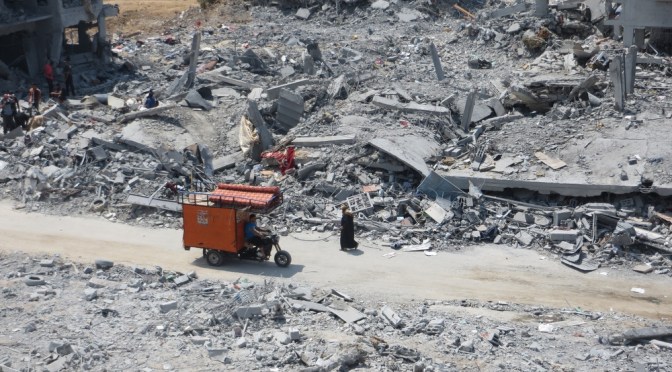
Taxi to Bethlehem, 40 shekels

Peace Studies Programs

Michael Westmoreland-White compiled this, thanks Michael!

As a service, I thought I would list all the U.S.  colleges and universities that have programs with names like “peace studies,” “peace and global studies,” “peacebuilding and conflict resolution studies,” etc. I found there were enough that I decided just to  list the church-related ones and do the others in a separate post.   Typically, such programs are multi-disciplinary involving faculty from several departments including international studies, history, philosophy, religious studies, international law, economic development, and/or political science or sociology. The earliest such programs in the U.S. were in institutions related to the “historic peace churches” (Mennonites, Church of the Brethren, and Friends/Quakers), but it has spread beyond them.

American University in Washington, D.C.  Private research university related to the United Methodist Church and not to be confused with “American Universities” around the world which are usually sponsored by the U.S. State Department.  4400 Massachussetts Avenue NW, Washington, D.C. 20016.  Highly selective and quite expensive.  Offers an M.A. in Peace Studies and Conflict Resolution that is highly regarded.

Arcadia University was until 2001 known by the somewhat ridiculous name of Beaver College, which is even sillier when you understand that this co-ed institution began life in 1853 as Beaver Female Seminary. (You can’t make  stuff like that up.) 450 South Easton Road, Glenside, PA 19038.  Originally founded by the Methodist Episcopal Church, Arcadia today is related to the Presbyterian Church (PCUSA), but has an independent board and an ecumenical spirit.  Arcadia’s mission is to prepare students specifically for a shrinking, global society.  It has a College of Global Studies and students are encouraged to  do part of their studies abroad.  Offers an M.A. in International Peace and Conflict Resolution. One can also earn a joint M.A./M.P.H. (Master of Public Health) or a Certificate in International Studies presented with another undergraduate or graduate degree.

Associated Mennonite Biblical Seminary, 3003 Bentham Avenue, Elkhart, IN 46517.  AMBS offers an M.A. in Peace Studies.  They also offer this M.A. as a joint degree with a Master of Social Work degree.

Bethany Theological Seminary 615 National Road West, Richmond, IN 47374.  This is the official seminary of the Church of the Brethren, one of the Historic Peace Churches.  Peace and Justice emphases are found throughout the curriculum, but one can also get a Peace and Justice concentration for either the Master of Divinity or Master of Theology degrees.

Bethel College in North Newton, KS is affiliated with the Mennonite Church, USA.  It is a private, 4-year co-ed liberal arts college of about 500 students.  Tuition is currently just under $16,000 per year which is below that of most private colleges and about 89% of students receive some form of financial aid.  Bethel houses the Kansas Institute for Peace and Conflict Resolution which both acts internally to administer the school’s Peace and Conflict Resolution program and externally sponsors projects in international peacebuilding.  Offers a minor in Peace, Justice, and Conflict Studies or a Certificate in Conflict Management to be added to any other degree program.

Bryn Mawr College. 101 North Merion Avenue, Bryn Mawr, PA 19010.  Founded by Quakers and originally a women’s college, Bryn Mawr is still informed by Quaker values. It offers a B.A. in Peace and Conflict studies in a joint curriculum  with Haverford College and Swarthmore College.

Chapman University, One University Drive, Orange, CA 92866.  Founded (as Hesperian College) by and affiliated with the Christian Church (Disciples of Christ), Chapman deliberately timed things to begin within one hour of Pres. Abraham Lincoln’s inauguration in order  to honor his vision of equal education for all people.  It is today a large, comprehensive university with seven consituent colleges or schools.  Offers a B.A. in Peace Studies at Wilkerson College of Arts and Humanities that includes a Model United  Nations option.  Courses in Peace, Conflict and Human Rights are also integrated into the M.A. in International Studies.  Other features include the Albert Schweitzer Institute  and the Rodgers Center for Holocaust Studies.

College of St. Benedict-St. John’s University 37 S. College Avenue, St. Joseph, MN 56374 is, as its name suggests, affiliated with the Catholic Church. The College of St. Benedict (for women) and St. John’s University (for men) are partnered liberal arts colleges located respectively in St. Joseph and Collegeville, MN–about 3 miles apart. Students attend classes together at both institutions.  They jointly offer a B.A. in Peace Studies.

Creighton University 2500 California Plaza, Omaha, NE.  It is a comprehensive Catholic university founded in 1878 by the Society of Jesus and still a Jesuit-run institution.  It’s College of Arts and Sciences has a multi-disciplinary program in Justice and Peace Studies (the order is very Jesuitical!) which offers a Justice and Society major  leading to a B.A. or a minor in Justice and Peace Studies.  There is also a $1,000 Justice and Peace Studies Scholarship  offered in honor of former Congressman Walter H. Capps.

DePauw University 313 South Locust Street, Greencastle, IN 46135.  Despite its name, Depauw is primarily an undergraduate liberal  arts college,  but it has a School of Music that offers graduate degrees.  Founded in 1837 by the Methodist Church as Indiana Asbury College, DePauw remains affiliated with the United Methodist Church today.  Offers a B.A. in Conflict Studies.

Earlham College 801 National Rd. West, Richmond, IN 47374, is a 4 year liberal arts college related closely to the Religious Society of Friends (Quakers).  It’s educational philosophy is shaped by both the liberal arts tradition (rather than a technical or research university) and by the perspectives of Friends’ beliefs–viz., that there is “that of God in everyone,” that all are equal and must be treated with equal  dignity, the commitment to search for Truth, to live simply, and to work for peace with all.  Earlham offers an interdisciplinary B.A. in Peace and Global Studies (PAGS), modified from its original Peace and Conflict Studies program.  All in the program must take courses in economics, history, philosophy, politics,  and sociology/anthropology.  Within the major, students choose one of the following focuses:  Conflict Transformation, Religion and Pacifism, Social Theory and Social Movements, International War and  Peace, African-American Civil Rights, Women and Social Change, Environmental Studies,  or a Student-Designed focus.  Earlham’s PAGS program is affiliated with both the Indianapolis Peace Institute and the Plowshares Project, which is a collaborative effort between the peace studies programs  of Indiana’s 3 Historic Peace Church-related colleges:  Earlham (Friends), Goshen (Mennonite), and Manchester (Church of the Brethren).

Earlham School of Religion 226 College Avenue, Richmond, IN 47374.  Since Unprogrammed Friends do not have pastors, this is one of the few Quaker seminaries and the oldest one.  It offers both an M.Div. and an M.Min. with a Peace and Justice concentration.

Eastern Mennonite University 1200 Park Rd., Harrisonburg, VA 22602 is a Mennonite Church, USA related university containing an undergraduate liberal arts college and a theological seminary and graduate school.  The undergraduate program offers a B.A. in Peacebuilding and Development  and a minor concentration in Peacebuilding.  The seminary offers a Certificate in Theology for Peacebuilding which can be added to either the Master of Divinity or Master of Arts in Religion degrees.  One can also earn and dual M.Div./M.A. in Conflict Transformation. Eastern Mennonite University’s Center for Justice and Peacebuilding runs a Graduate Program in Conflict Transformation leading either to a 15 hr. Certificate in Conflict Transformation or an M.A. in Conflict Transformation. (You have to wonder why more Christian seminaries, of whatever denomination, do not offer concentrations and degrees in peacebuilding and conflict transformation–for healthier congregations if nothing  else!)

Fresno Pacific University 1717 South Chestnut Avenue, Fresno, CA 93702.  Founded in 1944 by Mennonite Brethren (a Pietist offshoot of the Mennonite Church), Fresno Pacific is the only accredited church-related university in California’s Central Valley.  The undergraduate college offers a minor in Peace and Conflict Studies.  The graduate school offers an M.A. in Peacebuilding and Conflict Studies as well as Certificates in Church Conflict and Peacemaking, Mediation, Restorative Justice, School Conflict Resolution and Peacemaking, Workplace Conflict Management and Peacemaking, and a Personalized Certificate in Peacemaking and Conflict Studies.

Goshen College 1700 S. Main Street, Goshen, IN 46526. Is a liberal arts college closely affiliated with the Mennonite Church, USA.  It offers a B.A. in Peace, Justice, and Conflict Studies and a minor in Peace and Justice studies.  International education and service learning is emphasized throughout the curriculum for both faculty and students. (Most faculty spend their sabbaticals in service rather than just in writing.) Goshen is a participating member of the Plowshares Collaborative.

Guilford College,5800 W. Friendly Avenue, Greensboro, NC. 27410.  Founded  and closely related to the Religious Society of Friends (Quakers) first as a boarding school, then, beginning in the 1880s, as a 4 year liberal arts college.  Quaker values still inform the school, including its  educational philosophy.  Offers both a B.A. and a minor in Peace and Conflict Studies.  Related programs include a B.A. in International Studies and one in Justice and Policy Studies.

Gustavus  Adolphus College 800 W. College Avenue, St. Peter, MN 56082.  Founded in 1862 as a Lutheran boarding school, it is now a four year liberal arts college closely affiliated with the Evangelical Lutheran Church in America (ELCA), the largest Lutheran denomination in the U.S.  Offers a Peace Studies minor.

Hamline University 1536 Hewittt Avenue,  St. Paul, MN.  Closely associated with the United Methodist Church.  The undergraduate college offers a B.A. in Social Justice.  The Law School has a Center for Dispure Resolution which offers several conflict resolution certificates.

Haverford College. 370 Lancaster Avenue, Haverford, PA 19041.  Founded in 1833 by members of the Religious Society of Friends (Quakers), Haverford is a most selective liberal arts college. Though not formally related to any Friends Meeting today, Haverford’s educational philosophy and atmosphere is still deeply shaped by Quaker values and numerous Friends are still found among its faculty and students.  Haverford hosts a Center for Peace and Global Citizenship whose programs include a B.A.  in Peace and Conflict Studies  in cooperation with Bryn  Mawr College and Swarthmore College.  In the next year or so, Haverford will be reorienting to offer a B.A. in Peace, Justice, and Human Rights.

Juanita College 1700 Moore Street, Huntingdon, PA 16652.  Founded in 1872 by the Church of the Brethren on the Juanita River.  Instead of Majors and Minors, Juanita College emphasizes a core curriculum of  liberal arts with additional “programs of emphasis.”  It’s Department of Peace and Conflict Studies offers 3 such “POEs”: A B.A. in Communication and Conflict Resolution, one in Peace and Conflict Studies and one in Peace and Conflict Studies with a secondary emphasis.

Manchester College 604 College Avenue, North Manchester, IN 46962.  Affiliated with the Church of the Brethren, Manchester is a small, selective, Christian liberal arts college.  Established in 1948, the Peace Studies Institute and Program in Conflict Resolution at Manchester actually began the field of peace studies which has now spread even beyond Christian circles.  Manchester offers a B.A. in Peace Studies with concentrations in either interpersonal/intergroup conflict studies, international and global  studies, or an individualized concentration.  There is also a Peace Studies minor. Manchester’s Peace Studies Institute and Program in Conflict Resolution is part of the Plowshares Collaborative that coordinates the peace studies programs of all three Historic Peace Church-related colleges in Indiana: Earlham, Goshen, and Manchester.  The Institute publishes Nonviolent Social Change previously called the Bulletin of the Peace Studies Institute.

Manhattan College Manhattan College Pkwy., Bronx, NY 10471.  Manhattan College is a Roman Catholic liberal arts college in the Lasallian tradition in 1853 in Riverdale, the Bronx, New York (despite its name, the school is no longer on the island of Manhattan).  Offers a B.A. in Peace Studies that is multidisciplinary and deals with arms races and war, economic, political and social justice, conflict creation, management, and  resolution, nonviolent philosophies and strategies of resistance, and world community and world government.  The first course in peace studies was offered at Manhattan College in 1958 and it has had a complete B.A.  program since 1971. The program offers several prestigious fellowships, internships, and scholarships, semesters in Washington, D.C. or the New York legislature in Albany.  There is a Model United Nations option and plenty of placement counseling beyond graduation.

Messiah College One College Avenue, Grantham, PA. 17027.  This is a small liberal arts college founded by and closely related to the Brethren  in Christ Church, a Pietist offshoot of the Mennonites.  Through its Sider Institute for Anabaptist, Wesleyan, and Pietist Studies, Messiah offers a Minor in Peace Studies.

Swarthmore College 500 College Avenue, Swarthmore, PA 19081. Swarthmore is a most selective, private, liberal arts college founded by the Religious Society of Friends (Quakers).  Today the school is non-sectarian, but Quaker values still inform its educational philosophy.  The Peace and Conflict Studies Program at Swarthmore offers a B.A. in Peace and Conflict Studies.  As well, students in any major can add a minor in Peace Studies.  The program at Swarthmore is multidisciplinary and participates jointly with the Peace and Conflict Studies programs at Bryn Mawr College and Haverford College, the Tri-College Consortium.  Swarthmore’s library boasts  one of the largest collections of primary documents related to peace and justice movements in the  world.  It is part of the Greater Philadelphia Higher Education Peace and Social Justice Consortium. Swarthmore also  hosts the Lang Center for Civic and Social Responsibility.

University of Notre Dame 54801 Juniper Road, Notre Dame, IN 46556.  The University of Notre Dame du Lac (or just Notre Dame) is a private, Roman Catholic national research university in Notre Dame, IN, near the town of South Bend and 90 mi. East of Chicago, IL.  Admission is highly competitive. Over 70% of incoming students graduated in the top 5% of their high school class.  Once an all male school, women, first admitted in 1972, now comprise 47% of the undergraduate student population. Once nearly all white, minority enrollment has more than tripled in the last 20 years.  Notre Dame houses the Kroc Institute for International Peace Studies.  Through the Kroc Institute, students may earned a B.A., M.A., or even Ph.D. in Peace Studies–in a multidisciplinary setting working with several departments in Notre Dame.  This is one of the very few places offering a Ph.D.  in Peace Studies.

University of San Diego 5998 Alcala Park, San Diego, CA 92110.  The University of San Diego (USD) is a private, comprehensive Roman Catholic university in the City of San Diego.  It offers over 60 degrees (Baccalaureates, Masters’, and Doctorates) in six separate schools. One of those schools is the Joan B. Kroc School of Peace Studies.The Kroc School at USD contains an Institute for Peace and Justice, a Conference Venue, and a Trans-Border Institute.  The Kroc School offers a minor in Peace Studies for undergraduates and an M.A.  in Peace and Justice Studies for graduate students.  Each year one or two distinguished peace scholars (who  are usually also activists) are brought to USD as Joan B. Kroc Peace Scholars.

University of St. Louis, One Grand Blvd., St. Louis, MO.  SLU is a medium sized Catholic university in the Jesuit tradition.  Now offers a Certificate in Peace  and Justice Studies.

University of St. Thomas 2115 Summit Avenue, St. Paul, MN 55105.  The University of St. Thomas is a comprehensive university founded in 1885 by Archbishop  John Ireland. It’s an archdiocesan university.  They have a B.A. and a minor in Justice and Peace Studies.

Villanova University 800 E. Lancaster Avenue, Villanova, PA 19085.  Villanova is a medium sized Catholic university in the Augustinian tradition.  Has a Center for Peace & Justice Education.  Offers either a minor or concentration in Peace and Justice Education. The Center publishes the Journal for Peace and Justice Education.

Walsh University 2020 E. Maple St., North Canton, OH 44720.  A Catholic university founded by the Brothers of Christian Instruction.  The Department of Social Sciences offers a Peace Studies minor.

That’s all the specifically Christian colleges or universities in the U.S.  with Peace Studies programs that I have found.  If I have missed some, please alert me and I’ll add to this list.  In a later post, I”ll add in programs at schools without a faith-based perspective, including the U.S. Institute of Peace.

Believe it or not these programs are quite controversial.  During the Bush years, many conservative magazines and websites ran articles and advertisements  against these programs, saying that they had declared war on America!  Let’s face it:  Peacemaking is subversive of the status quo–regardless of which party controls the government or  who lives in the White House (or any other nation’s seat of government). When peacemakers come on the scene: Jesus or Buddha or Gandhi or Martin Luther King, Jr. or Aung San Suu Kyi or Thich Nhat Hanh or Badshah Khan or Dorothy Day–they are always seen as troublemakers and disturbers of the peace, rather than as peacemakers.

4 Ideas for the Assemblies of God USA

I presented this at the Society for Pentecostal Studies conference March 4, 2010 in Minneapolis, as a response to Margaret Poloma’s book “The Assemblies of God: Godly Love and the Revitalization of American Pentecostalism.”

….reading your book about the denomination of my faith heritage provoked many thoughts about the roads, the paths, that the AG at the crossroads can now take, but I will focus only on four that I think will help us know if we’re going to be more or less faithful to Jesus and revitalized by the Spirit.

My context – I am a fourth generation Assembly of God kid from Kansas – my great grandparents and grandparents came into the movement in the 1930s and 40s, my parents were raised in the AG and so was I. Almost every night of my life until I was eighteen years old and left for college, my father would come into my room, kneel down next to my bed, lay his hand on me, and weep and pray for me, our family, the church, and the world. The essence of my father’s theological and practical advice for me, that he has repeated repeatedly my entire life, is “Seek Jesus.” I attended an AG college, an AG seminary, AG summer camps, went on AG mission trips, taught at an AG college for nine years, and I’m still an AG minister.

So I’m responding to Margaret’s sociological study of the AG and trying to listen to my father’s advice to “seek Jesus.”

1) Racism

Regarding the founding of AG – racism was a significant factor in the 350 white ministers leaving the Church of God in Christ to form the AG in 1914.

a. Official AG USA publications need to refer to this openly, with repentance, and with theological explanations of diversity and white privilege.

b. I was a tongue talking racist, that’s part of my testimony. I once was blind but now I see, I now see the reality of white privilege and how deeply prejudiced I was (even though I was in church multiple times a week, youth camp every summer, etc. In fact, I learned many of the racist jokes from my youth group leaders and friends), and I gain nothing from denying that. Honesty, confession, repentance, transformation – these are marks of sanctification and maturity and the AG USA would do wonderfully well to keep its historical sins front and center, and it’s reasons and strategies for addressing them and being healed from them front and center as well. The door for this has been opened by the AG statement against racism, which reads in part:

“The church calls to repentance any and all who have sinned against God by participating in racism through personal thought or action, through church and social structures, or through failure to address the evils of racism.”

“We pray for God to give us the courage to confront the sin of racism where it may be found in our lives, in our churches, in our society structure, and in our world.” We must cooperate with the Holy Spirit in actively rooting out racism and seeking the reconciliation of men and women to God and to each other.

c. Pentecostals testify, so the AG USA should share it’s testimony that it has a sinfully racist past (the origin story should be modified to reflect this), still perhaps struggles with racism and prejudice, and that it’s being delivered as it explores the intricacies of race and ethnicity as a predominantly white denomination founded primarily by white ministers who had left an interracial denomination (COGIC).

2) War – Military Service Article

a. Many of us know that the early AG, and most early Pentecostal denominations, were peace churches and took their stands as conscientious objectors or noncombatants during World War I and even during World War II. They justified this theologically, based on Jesus. They had a christocentric hermeneutic that justified their commitment to loving their enemy.

I should also mention here that “pacifism” does not mean being “passive” and does not necessitate being ‘apolitical.’ Pacifist simply means “peace maker” so laying down one’s sword and supporting nonviolent direct action to attain political goals can certainly go together – Dr. King was a Christian pacifist, but he was certainly not apolitical.

b. As many of you know the AG changed its statement in 1967 to be pro-choice, leaving killing in warfare up to the individual conscience of each Christian. There is a reference to Romans 13, warfare in the OT, but nothing about Jesus. Combatant participation in war could be justified better than the statement currently does, and I think the just war tradition/theory/criteria should be articulated.

c. Therefore, I have a concrete suggestion for the AG at this crossroad between the road of uncritical nationalism and uncritical militarism and the road of thoughtful, reflective, and engaged conversations about these challenging issues.

d. The AG should form a task force that writes well developed rationales for 1) combatant participation, employing just war tradition and written by AG folk who believe that it is justifiable for Christians to kill in warfare, 2) nonviolence, written by AG folk who believe in consistent nonviolence and who could speak theologically and pastorally about conscientious objection and noncombatant service, and 3) Just Peacemaking practices that invite both just war theorists and pacifists to work for peace and justice together to prevent war and reduce violence, which is a goal of just war theory. Just Peacemaking theory is an excellent attempt to move past the age old arguments of “it’s okay to kill” and “Christians should never kill” to working together on the things that make for peace. I recommend Glen Stassen’s book Just Peacemaking: The New Paradigm for the Ethics of War and Peace.

e. Christian explanations of all three should be present in our curriculum, ‘position statements’, on our website. This would reflect what we officially as a denomination have already affirmed with our participation in the unanimous NAE vote to adopt “For the Health of the Nation.” The NAE, of which the AG is a member, has already stated that each denomination should teach just war, pacifism, and just peacemaking.

3) Israel/Palestine

a. On page 213 Margaret points out that 11% of AG USA folk do not think that the US should support Israel over the Palestinians in the Middle East. In other words, we should support the Palestinians and the Israelis equally. I think this 11%, this prophetic minority, represents the road that the AG should travel if we are to be as biblically solid, theologically healthy, and Spirit-led as we claim to be.

b. I suggest that AG USA learn from our Palestinian Pentecostal Christian brothers and sisters so that we can read scripture better and become less dispensational and less one-sidedly Zionist. We can love Israel, love Jewish people, and support the existence of the state of Israel while also helping the state of Israel make wiser choices regarding the settlements, the occupation of the West Bank, the wall not being built on the green line, and the implementation of a just peace for both Israelis and Palestinians.

c. This means that American Pentecostals in general, the AG USA in particular, could put ourselves in humble learner positions and hear the testimonies and prayer requests (the subaltern voices, and theology and experiences) of the Palestinian Pentecostal and Evangelical Christians who have lived under occupation in the ‘Holy Land.’

4) Gender

a. The AG ordains women and has since its inception. George Wood has even defended this position against Southern Baptist and fundamentalist critiques.

b. But we need more intentionality in promoting and empowering women in pastoral and denominational leadership. 28% of AG ministers do not support women serving as senior pastors, 43% do not support women in district or national leadership, and 47% do not support having women on deacon boards. These are serious problems, and as a theologian I would suggest that these attitudes represent less than healthy, less than faithful, and less than ‘pentecostal’ understandings of scripture, gender, and leadership. I think is not the road that the AG should travel on in the future.

c. A way to pave the road for smoother travel into a more faithful future is to intentionally include women in leadership positions in district and national offices, even if there are quotas – not tokenism to fill a slot for political reasons – but intentional reduction of male leadership and increase of female leadership to reflect what the Spirit really would like to happen so the church can be better equipped to fulfill her potential. However, there’s a lot of theological work that has to be done so that men can realize that it’s not their ministry to share any way, it’s not ‘their’ power or their place that they then graciously open up to women. Ministry and leadership are God’s gifts to give, it’s God’s ministry, not men’s.

In conclusion, I think the AG can even now “seek Jesus” and choose roads of life, and pave those roads, and that we can journey forward in confession and truth-telling regarding our racist past so that we can authentically and deeply experience healing and transformation; that we can journey forward by expanding the conversations about war and peacemaking by articulating just war criteria, nonviolence, and just peacemaking practices; that we can best support Israel by also supporting the Palestinians and listening to the voices of that part of our Pentecostal family that has been suppressed; and that we can intentionally work to change the minds of thousands of AG men (and women) who are against women in leadership and intentionally changing the structure of the AG so that women must be included. I believe that this is at least part of what the Spirit is doing today to expand Godly Love.

Bethlehem Evangelical Affirmation

Please read, endorse, practice, and share The Bethlehem Evangelical Affirmation for the health of Israel and Palestine.

The Bethlehem Evangelical Affirmation

March 17, 2010

Bethlehem

We affirm the foundational truth that God loves everyone (John 3:16).

We affirm that as followers of Jesus Christ we are called to do justice and love mercy (Micah 6:8), to be ministers of reconciliation (2 Corinthians 5:11-21), and to be peacemakers (Matthew 5:9).

We affirm that the Holy Spirit empowers followers of Jesus to speak and live humbly and prophetically (Acts 1:8).

We recognize that this is the time to resolve the Israeli-Palestinian conflict.

Therefore, we are convinced that the Holy Spirit is leading us at such a time as this to unite as Christians throughout the world in order to pray and work for a just peace in Israel and Palestine.

To this end, we commit to reconnect with the local Palestinian church and to listen and learn from all those who follow Jesus in the Holy Land and to share their stories with our own faith communities.

We further commit to work together to advocate changes in public policy and so achieve a just and lasting resolution of the conflict. Our vision and our hope is that Israelis and Palestinians will live in justice and peace in the land of the Holy One.

Endorse The Bethlehem Evangelical Affirmation

Join The Bethlehem Evangelical Affirmation Facebook Group

Drafting Committee

Paul Alexander

Christine M. Anderson

Brother Andrew

Alex Awad

Bishara Awad

Mubarak Awad

Sami Awad

Gary Burge

Tony Campolo

Steven Haas

Lynne Hybels

Manfred Kohl

Jonathan Kuttab

Paul Johnson

Salim Munayer

Stephen Sizer

Porter Speakman, Jr.

Return top